In a nutshell
- 🧪 Tea’s tannins and mild acidity loosen soap scum and mineral haze, leaving a thin hydrophilic layer that promotes streak-free shine.
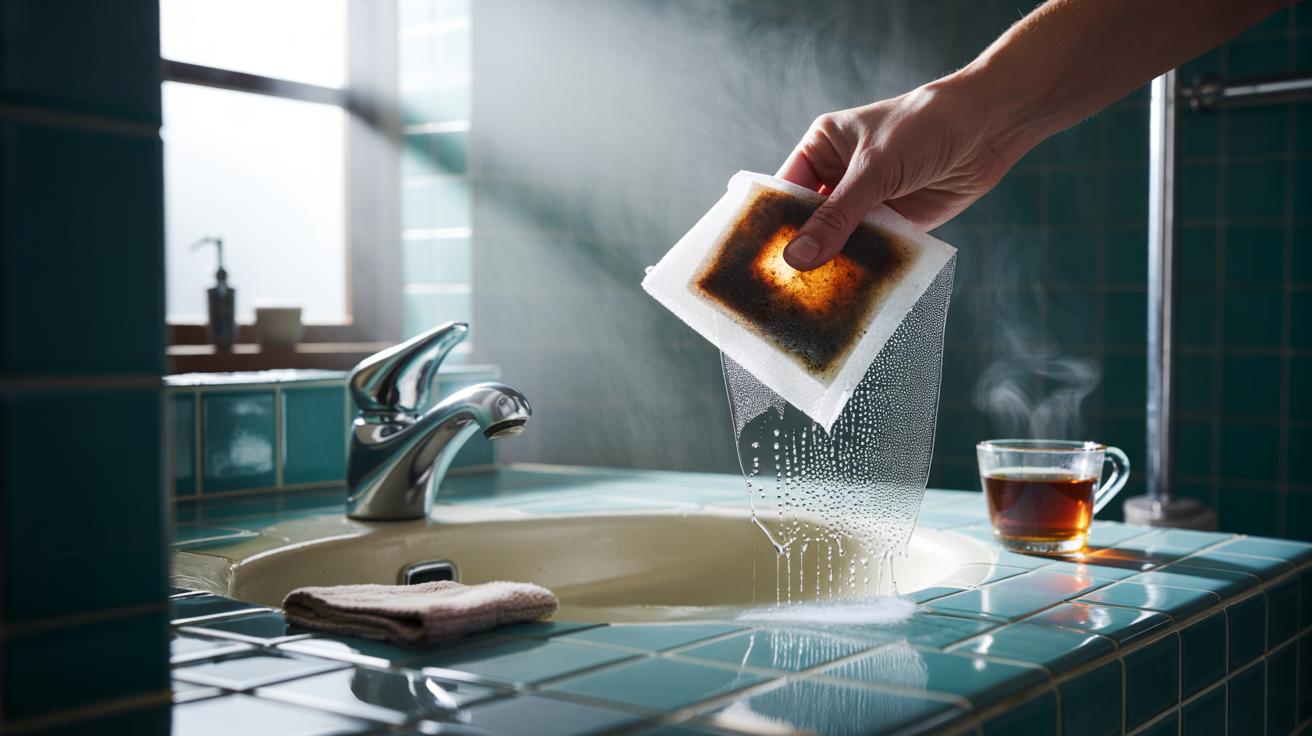
- 🧽 Method: use a used black tea bag, squeeze to damp, swipe in overlaps, then buff immediately with a clean microfibre cloth from top to bottom.
- ⚠️ Best for everyday haze on mirrors, glass, and chrome; not ideal for heavy grease or coated surfaces—pre-clean first and avoid dripping on unsealed stone.
- 🌱 Budget and planet friendly: upcycle a used tea bag, cut bottles and VOCs, and compost afterwards for a low-waste routine.
- ⏱️ Real-world results in seconds; repeat once for stubborn spots and consider filtered water in hard-water areas to curb streaks.
Britain’s most beloved brew has a surprising second act. A used tea bag can turn a cloudy bathroom mirror into a gleaming pane in under a minute, leaving behind no chemical tang or waxy film. The trick is simple and brilliantly thrifty. Steep, squeeze, swipe. Yet there’s chemistry at play: plant compounds in tea loosen grime, soften hard-water haze, and lay down an almost invisible, streak-busting layer. It’s an old-fashioned hack that meets modern standards for speed, clarity, and cost. Here’s how and why it works—and how to get the best possible shine with nothing more than yesterday’s cuppa and a clean cloth.
The Science Behind Tea’s Gleam
At the heart of tea’s cleaning power are tannins—polyphenolic compounds that interact with the residues that dull glass. Bathroom mirrors collect a cocktail of soap scum, skin oils, and hard-water minerals. Tannins help break the bond between these films and the slick surface of glass, loosening them so they can be wiped away without smearing. Tea also sits in the mildly acidic range (typically pH 4.5–6), which assists in lifting mineral deposits without the harshness or fumes of stronger acids. That mild acidity is key to fast, streak-free results.
There’s a second advantage. Polyphenols can leave a whisper-thin, hydrophilic layer that helps water sheet off evenly rather than beading into tell-tale droplets. Think anti-streak insurance. This isn’t a sticky coating; it’s more of a microscopic primer that makes the final buff dramatically easier. The effect is subtle but noticeable, especially on mist-prone bathroom mirrors. In short: tannins loosen, mild acidity lifts, and a light polyphenol film levels. The glass looks clearer. The shine lasts longer. And there’s no perfumed residue to catch the light and betray your efforts.
How to Use Tea Bags on Mirrors and Glass
Start with a plain, used black tea bag; stronger brews carry more tannins than most herbal or green varieties. Let it cool until warm, then squeeze until damp-not-dripping. Lightly glide the bag over the mirror in overlapping strokes. Work quickly. You’re not scrubbing so much as painting a thin, even slick that softens the film. Follow immediately with a clean, dry microfibre cloth, buffing from top to bottom. Speed is part of the magic—wipe, then buff before the moisture dries. For heavy spotting, repeat once. If your tap water is very hard, a final spritz of cooled tea made with filtered or distilled water can reduce mineral streaks.
Short on time? Pre-brew a small cup, dunk a cloth, wring hard, and use the tea-damp cloth as your applicator. The same method works on interior windows, shower screens, and stainless taps—though avoid unsealed stone surrounds. Keep motions light; pressure only smears oils. Finish with a fresh section of cloth for that satisfying, squeak-bright polish.
| Step | Why It Matters | Pro Tip |
|---|---|---|
| Use black tea | Higher tannin content lifts films faster | One strong bag beats two weak |
| Squeeze to damp | Prevents drips that cause streaks | Wear gloves if you dislike stains |
| Buff immediately | Levels the hydrophilic layer for shine | Use a tight-weave microfibre |
When Tea Works Best—and When It Doesn’t
Tea excels at day-to-day haze: toothpaste mist, light limescale, fingerprints, and the dulling film from aerosol products. It’s brilliant on mirrors, indoor glass, and chrome. It’s decent on shower screens if used regularly. Yet it isn’t a miracle degreaser. Thick, baked-on grease or silicone-based residues from polishes may need a pH-balanced cleaner or an alcohol-based wipe before tea can do its polishing act. If your glass is cloudy after buffing, you’re fighting waxes or heavy oils—pre-clean, then finish with tea.
There are caveats. Avoid dripping tea onto unsealed stone (marble, limestone) or timber frames; acidity and moisture can mark them. Don’t use on specialty anti-reflective coatings unless the manufacturer says water-based cleaning is safe. Always test a corner. If water spots reappear, your cloth may be saturated—swap it out. And resist the temptation to store wet bags in bathrooms for days: they can go mouldy. Brew fresh, use quickly, compost the bag. That’s the low-waste rhythm that keeps the trick clean, effective, and odour-free.
Cost, Sustainability, and Real-World Results
From a household budget view, the numbers are persuasive. A single used tea bag can refresh multiple mirrors, turn a window from dull to daylight-bright, and still leave enough strength for a final polish pass. No propellants, no plastic bottle, and almost no waste if you compost. The scent is neutral. The method is quiet. And the speed is real: most users report a visible improvement in seconds, with a full buff taking under a minute per mirror. It feels almost like cheating—particularly in rentals where haze builds fast and chemical smells linger.
Sustainability adds extra shine. You’re upcycling a by-product you already own, cutting down on niche cleaners, and reducing the risk of airborne VOCs indoors. The result isn’t just clean; it’s naturally crisp. Tea’s gentle chemistry delivers clarity without the trade-offs of harsh solvents. For meticulous perfectionists, pair the tea pass with an edge-detail using a dry cotton swab, and you’ll get the kind of uniform, gallery-grade finish that catches the morning light and keeps it.
Tea bags won’t replace every cleaner in the cupboard, but they earn a permanent slot for glass and mirrors that look tired rather than filthy. The appeal is obvious: cheap, quick, low-odour, and strikingly effective on everyday haze. Try it on your bathroom mirror tonight; note the instant lift and how easily the final buff slides to a squeak. Then test a window at dawn, when streaks show the most. If a humble brew can win over your inner sceptic, what other quiet, low-tech tricks might be hiding in your kitchen drawer, waiting to make housework lighter and faster?
Did you like it?4.6/5 (29)