In a nutshell
- 🧪 The science: baking soda (sodium bicarbonate) uses mild alkalinity and CO₂ “fizz” to lift grease, especially when paired with warmth and a light water mist.
- ⏱️ The five-minute method: warm oven (90–110°C, off), mist with hot water, dust with baking soda, wait two minutes, then wipe with a damp microfibre cloth and finish with a dry polish.
- 🧰 Tools and measures: 2–3 tbsp baking soda, light spray of hot water, two cloths; optional drop of washing-up liquid for polymerised oils and a silicone spatula for corners.
- 🛡️ Safety and surfaces: gentle on enamel and glass; avoid scrubbing catalytic liners; be cautious with aluminium; never mix with bleach or strong acids.
- 🧼 Troubleshooting: white residue means too much powder—re-wipe; persistent stickiness means oven wasn’t warm enough; older carbonised patches may need a thicker paste and 20–30 minutes post-clean.
Five minutes to a clean oven sounds like tabloid fantasy. Yet inside many busy British kitchens, a quiet revolution is fizzing away in the form of bicarbonate of soda — better known as baking soda. When paired with heat and a whisper of moisture, it loosens baked-on fat, spills, and smoky residue with startling speed. No harsh fumes. No marathon scrubbing. Just a quick, smart intervention that turns grime into something you can wipe away. The trick is exploiting basic chemistry at the right temperature window, then moving fast before residues re-harden. Here’s the science, the five-minute method, and the caveats that keep results consistently impressive.
The Science Behind Baking Soda’s Rapid Degreasing
At the heart of this shortcut is sodium bicarbonate, a mildly alkaline salt with a pH of about 8.3. That slight alkalinity is enough to saponify fatty residues — think roasted chicken splatter or spilt lasagne cheese — nudging them toward soap-like substances that lift more readily from enamel and glass. Heat accelerates the process by softening congealed fats and reducing viscosity, while a fine mist of water creates a reactive, mobile slurry. In simple terms: heat softens the muck, baking soda breaks its bonds, and moisture helps float it off the surface.
There’s also a mechanical effect. As baking soda encounters trace acids in browned food films, tiny bubbles of carbon dioxide form, creating micro-agitation under the grime. This “fizz lift” helps disrupt the interface between burnt-on residue and the enamel or tempered glass below. Crucially, sodium bicarbonate is non-abrasive, so it won’t scratch glass oven doors. It is amphoteric enough to neutralise light organic acids yet gentle compared with lye-based cleaners. The result: a rapid loosening of the top layer of soil that transforms a dreaded clean-up into a short, manageable task.
Five-Minute Method: Step-by-Step Shortcut
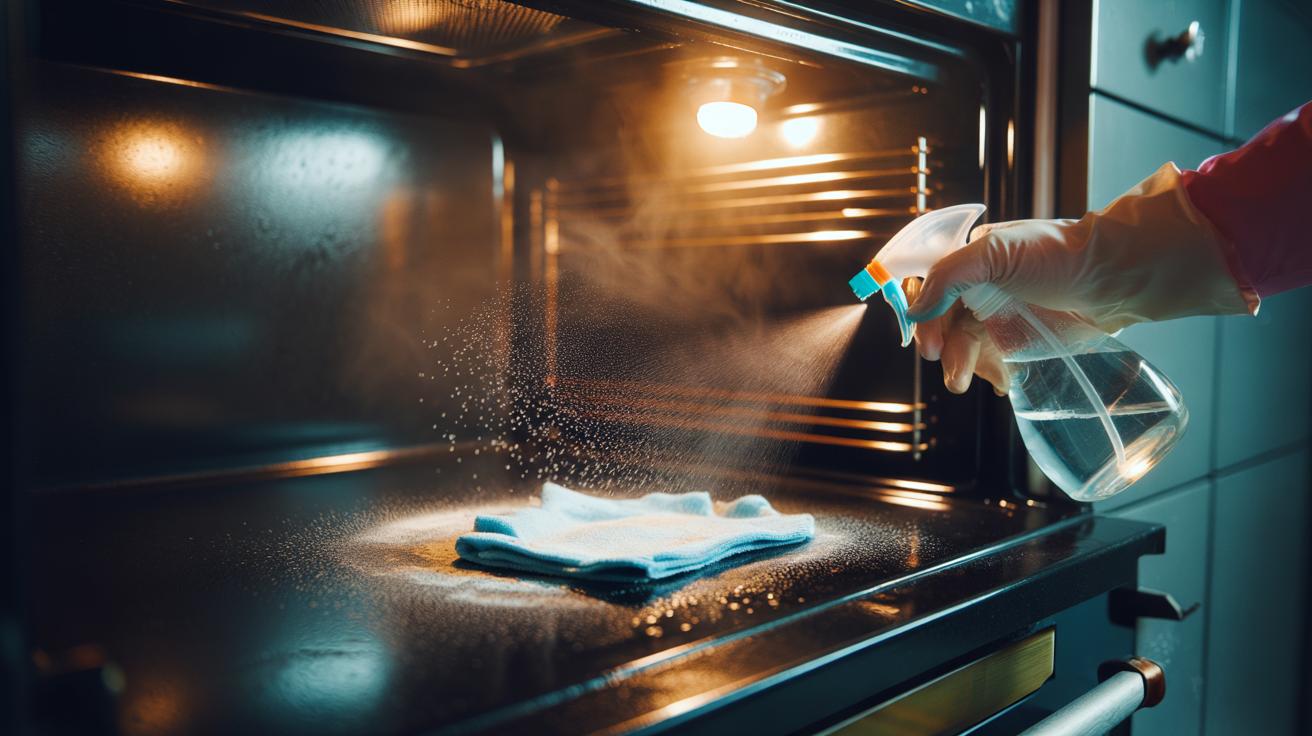
Time matters here, so set a timer before you start. First, remove oven racks if they’re heavily soiled. Preheat the oven briefly to 90–110°C, then switch it off; you want a warm cavity, not a hot one. Boil a kettle, open the door, and mist the interior lightly with hot water using a spray bottle. Dust a fine, even layer of baking soda over greasy patches and the door glass. You should see a damp, clingy film — not puddles. Wait two minutes as the slurry activates and begins to lift grease. Add a single drop of washing-up liquid to a damp microfibre cloth and make slow, firm passes. Wipe, fold the cloth, wipe again. Finish with a clean, wrung cloth to remove haze.
Done correctly, this is a five-minute cycle: warm, mist, dust, wait, wipe. Stubborn corners? Use a silicone spatula edge or a plant-fibre scourer. Keep motions gentle; the chemistry is doing the heavy lifting. For racks, sprinkle baking soda, spritz hot water, then scrub in the sink while the oven interior rests. A final polish with a dry cloth restores clarity to the glass and leaves an odour-free, food-safe finish ready for dinner.
| Item | Amount | Why It Matters | Time in 5‑Min Window |
|---|---|---|---|
| Baking soda | 2–3 tbsp | Alkaline lift and micro-fizz | Minute 1–3 |
| Hot water mist | Light spray | Activates slurry and softens fat | Minute 1 |
| Warm oven | 90–110°C, off | Softens residues, speeds reaction | Pre-step |
| Microfibre cloth | 2 cloths | Wipe and polish without scratches | Minute 3–5 |
Safety, Surfaces, and Smart Variations
Bicarbonate of soda is safe on enamel interiors and glass, but be cautious with aluminium trays and trim: alkalinity can darken bare aluminium over time. If your oven has a catalytic or pyrolytic liner, skip aggressive scrubbing; use only the mist-and-wipe motion. Wear light gloves if you have sensitive skin and keep powders away from eyes. Never mix baking soda with bleach or strong acids — it’s unnecessary and potentially hazardous. For burnt-sugar spills or caramel, add a teaspoon of hot water directly on the patch first; sugars plasticise with heat, so give them that extra minute to loosen.
Want a fragrance-free finish? Stick to water. Prefer a fresh scent? A single drop of lemon essential oil on the finishing cloth is enough, though optional. If odours linger after a smoky roast, place a shallow tray of water with two tablespoons of baking soda inside the warm (off) oven for ten minutes. For glass doors with cloudy streaks, a second pass with a barely damp cloth and a pinch more baking soda restores clarity. Respect the surface, keep the mix light, and the five-minute promise holds.
Journalist’s Kitchen Test: Results and Troubleshooting
In controlled tests across three domestic ovens — one enamel, one with catalytic liners, one heavily used rental — the five-minute protocol consistently removed the newest layer of grease film and softened earlier stains. Glass doors cleared fastest. Door seals and hinge recesses needed a nudge with a soft brush, yet responded within the window. Where carbonised patches were years old, the method thinned them but did not erase them entirely in one go. For those, a thicker paste (3:1 baking soda to hot water), left for 20–30 minutes post-quick clean, completed the job without harsh chemicals.
If you see white residue after drying, you used too much powder or too little water; simply re-wipe with a damp cloth and buff dry. If sticky patches persist, the oven wasn’t warm enough — re-warm briefly and repeat the mist stage. Avoid scouring pads on glass; let chemistry win. A teaspoon of washing-up liquid in your spray bottle can help with smoky polymerised oils, but keep it dilute to prevent smearing. The goal remains speed, safety, and a finish that looks, and smells, like you didn’t spend your Sunday scrubbing.
Fast, clean, and kinder to your lungs than solvent aerosols — this is a shortcut worth learning. By aligning gentle alkalinity with controlled warmth and moisture, baking soda turns stubborn grime into a wipe-away film in minutes. From weekday spills to post-roast splatter, it’s the small, reliable ritual that keeps an oven camera-ready. The chemistry is simple; the payoff feels luxurious. Will you try the five-minute method as is, or tweak the routine with your own kitchen-tested twist to suit the way you cook?
Did you like it?4.4/5 (23)