In a nutshell
- 🧪 Baking soda (bicarbonate of soda) works in two minutes by raising pH to loosen pigments while its crystals adsorb moisture and odours; a light fizz with white vinegar helps nudge particles from fibres.
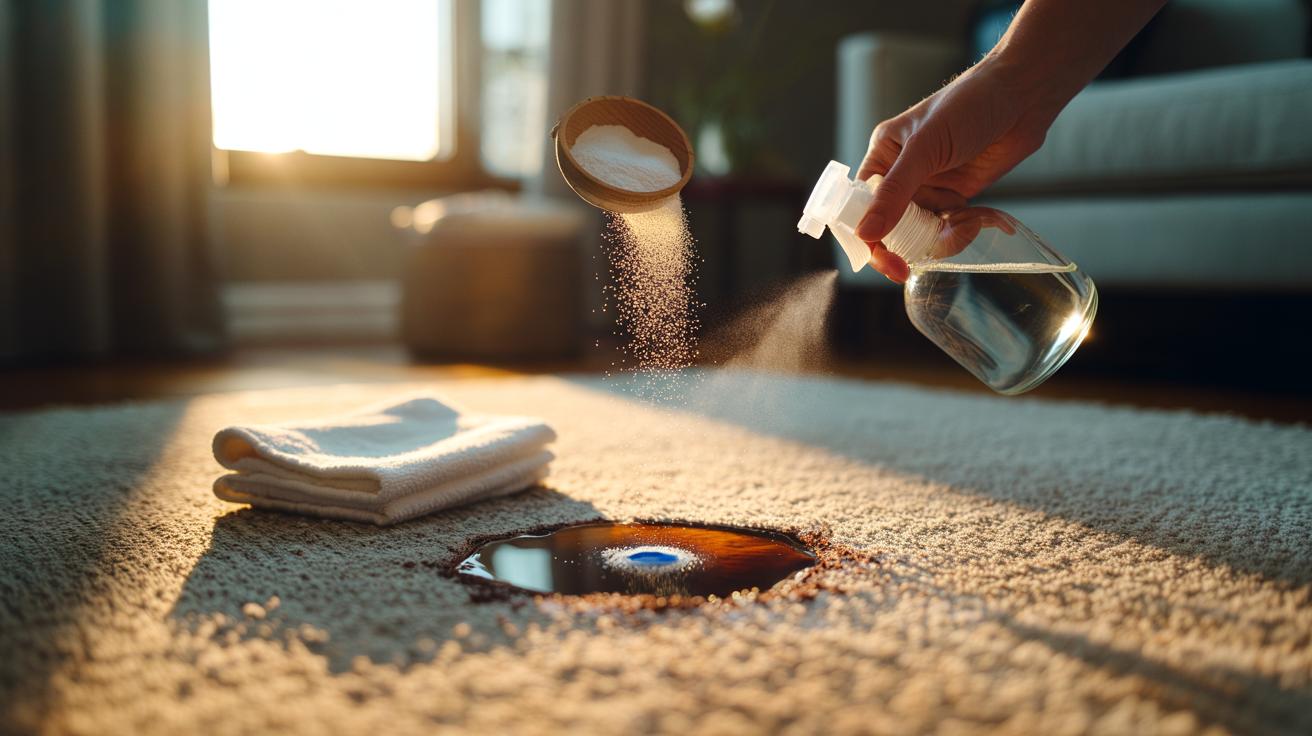
- ⏱️ The two-minute method: blot fast (don’t rub), dust generously, mist lightly (water or 1:1 vinegar), wait 60–120 seconds, blot again, then let dry and vacuum.
- 📋 Quick guidance covers coffee/tea, red wine, grease, mud, and pet accidents with exact teaspoon amounts, targeted liquids, and precise wait times for rapid lift.
- 🧵 Fibre-safe practice: always spot-test; use cool water on wool; avoid over-wetting and soap residue; protect wood and stone; follow with an enzyme cleaner for lingering pet odours.
- 🧰 Be ready: keep soda, a spray bottle, and white towels to stop spread fast; repeat light passes for older stains and consider a professional spotter for stubborn dye-based marks.
Spilled coffee, a splash of red wine, a mysterious mark left by the dog — carpets tell the story of our lives, loudly. The quickest, safest way to edit that story? Baking soda, known in the UK as bicarbonate of soda. It’s inexpensive, non-toxic, and astonishingly fast at taking the heat out of fresh stains. In just two minutes, it starts to lift colour, tame odours, and loosen the grime clinging to fibres. The trick is speed and method, not force. Act fast, blot smart, and let chemistry do the heavy lifting. Here’s how to turn a powder from your cupboard into a powerful newsroom-ready cleaning scoop.
Why Baking Soda Works in Two Minutes
Baking soda is a mild alkali. That means it gently raises pH, helping to neutralise acidic spills such as wine, juice, or coffee. The shift in pH makes many colour compounds less able to bind to carpet fibres, so they loosen more readily when blotted. Its tiny crystals add soft mechanical action without scratching most synthetic carpets, while the powder’s huge surface area adsorbs moisture and odours. Those two effects happen quickly. Within seconds, you’ll see dark patches dry out and brighten at the edges.
Where there’s a mix of fats — think takeaway drips or make-up — a pinch of washing-up liquid in water helps emulsify the grease while baking soda deals with acidity and smell. Pairing baking soda with a light mist of white vinegar creates fizz. That fizz isn’t magic; it’s carbon dioxide bubbles that physically nudge particles away from fibres. In the first two minutes, you’re not “deep cleaning”; you’re stopping spread and lifting the top layer fast.
The speed matters. Stains wick downward as liquid migrates along fibres and backing. By dusting promptly, baking soda acts like a sponge and a buffer. It slows the wicking, buys you time, and minimises the work needed later. For fresh messes, that can be the difference between a quick save and a lingering shadow.
The Two-Minute Method, Step by Step
1) Blot immediately. Use white kitchen towel. Press, don’t rub. Remove as much liquid as you can in 20–30 seconds. Rubbing shoves pigment deeper and frays fibres.
2) Dust generously. Shake a fine layer of baking soda over the damp patch — roughly one teaspoon per palm-sized area. The goal is full coverage, not a dune. Tap lightly with fingertips to settle the powder into the pile.
3) Mist, don’t soak. For acidic stains (wine, juice, coffee), spritz cool water. For alkaline or smelly stains (pet urine), spritz a 1:1 mix of white vinegar and water. Expect a gentle fizz if vinegar meets soda. Let it work for 60–90 seconds. Less liquid, better lift.
4) Blot again. Press down with fresh towel in firm, repeated stamps. You’ll see colour transfer to the towel as the powder wicks out the stain. If needed, add a pinch more soda and repeat the blotting cycle up to the two-minute mark.
5) Finish smart. For now, the surface should look markedly lighter. Leave the remaining thin dusting to dry fully, then vacuum. If a faint halo remains, repeat a single light pass. Most fresh stains surrender when you combine speed, soda, and restraint.
Quick Reference: Ratios, Stains, and Wait Times
Need a newsroom-ready crib sheet? This at-a-glance guide keeps you moving fast, with the right mix for common culprits. Keep a trigger bottle and a small tub of bicarbonate of soda under the sink, and you’re halfway to victory before panic sets in.
| Stain Type | Pre-Treatment | Baking Soda Amount | Liquid | Wait Time | Note |
|---|---|---|---|---|---|
| Fresh coffee/tea | Blot 20–30s | 1 tsp per 10×10 cm | Water mist | 90 seconds | Neutralise acids, then blot |
| Red wine | Salt dab optional | Heaped tsp | Water mist | 120 seconds | Don’t rub; lift |
| Greasy takeaway | Scrape solids | 1 tsp | 1 drop washing-up liquid in water | 60–90 seconds | Blot, then repeat light pass |
| Mud/soil | Let dry, vacuum | Light dusting | Water mist | 60 seconds | Target remaining marks only |
| Pet accident | Blot, enzyme cleaner optional | Heaped tsp | 1:1 vinegar:water | 120 seconds | Deodorise, then dry fully |
Keep liquids minimal; over-wetting drives the stain downward. If you own a wet/dry vacuum, a single quick pass after blotting speeds drying and prevents rings. For older, set-in marks, the same ratios help, but you may need two cycles and a longer dry before vacuuming. The two-minute sprint remains your first, best move.
Safety, Carpet Fibres, and Common Mistakes
Carpets aren’t all alike. Wool and wool blends deserve special care: stick to cool water and gentle blotting, and avoid prolonged vinegar contact. Nylon and polyester are hardier but can still fuzz if you scrub. Always spot-test on an inconspicuous patch. Baking soda itself is colour-safe, but the liquid you pair with it — too much water, too hot, too soapy — can leave rings or residue.
Common pitfalls? Over-wetting, impatient rubbing, and dumping on half the box of soda. Use enough to cover, not cake. Keep sprays fine and controlled, never a drench. After treatment, let the thin residue dry and vacuum thoroughly so no powder lingers to dull the pile. If odours persist from pet accidents, follow with an enzyme cleaner once dry; soda tackles smell quickly, enzymes tackle what’s feeding the smell.
Watch your surroundings, too. Do not allow vinegar to run onto natural stone thresholds under your rug. Protect wood floors beneath with a towel. And remember: if a stain is dye-based and weeks old, soda still helps but may need backing from a professional spotter. Your first two minutes still determine the outcome.
Quick, calm, and chemical-light: that’s the power of bicarbonate of soda on carpet stains. In two minutes you can halt spread, lift the top layer, and neutralise odours, saving hours of scrubbing later. It’s simple household science paired with newsroom discipline — fast, factual, and effective. Keep a tub handy, a spray bottle ready, and a stack of white towels within reach. The next spill won’t write its own headline across your lounge. What tricky stain do you want to beat with the two-minute baking soda method next?
Did you like it?4.4/5 (28)