In a nutshell
- 🧅 Uses an onion’s natural acids and sulfur compounds plus gentle micro-abrasion to loosen iron oxides while preserving edge geometry and tool temper.
- 🛠️ Step-by-step: prep and inspect, rub with a halved onion, boost with salt or bicarbonate for stubborn spots, let juices sit briefly, then wipe/rinse, dry thoroughly, and oil with camellia or mineral oil.
- ⚖️ Compared with vinegar, citric acid, and gels, the onion offers high control, low odour, and is best for light rust and edge tools, while stronger chemistries suit heavy scale and soak jobs.
- 🛡️ Safety and preservation: wear gloves, avoid soaking wooden handles, protect patina, finish with oil or wax, add pivot grease, and store with desiccant or VCI paper.
- 🔎 Limitations and strategy: not a cure for deep pitting, but excellent for quick maintenance, patina preservation, and staged restorations where mechanical loosening precedes targeted chemistry.
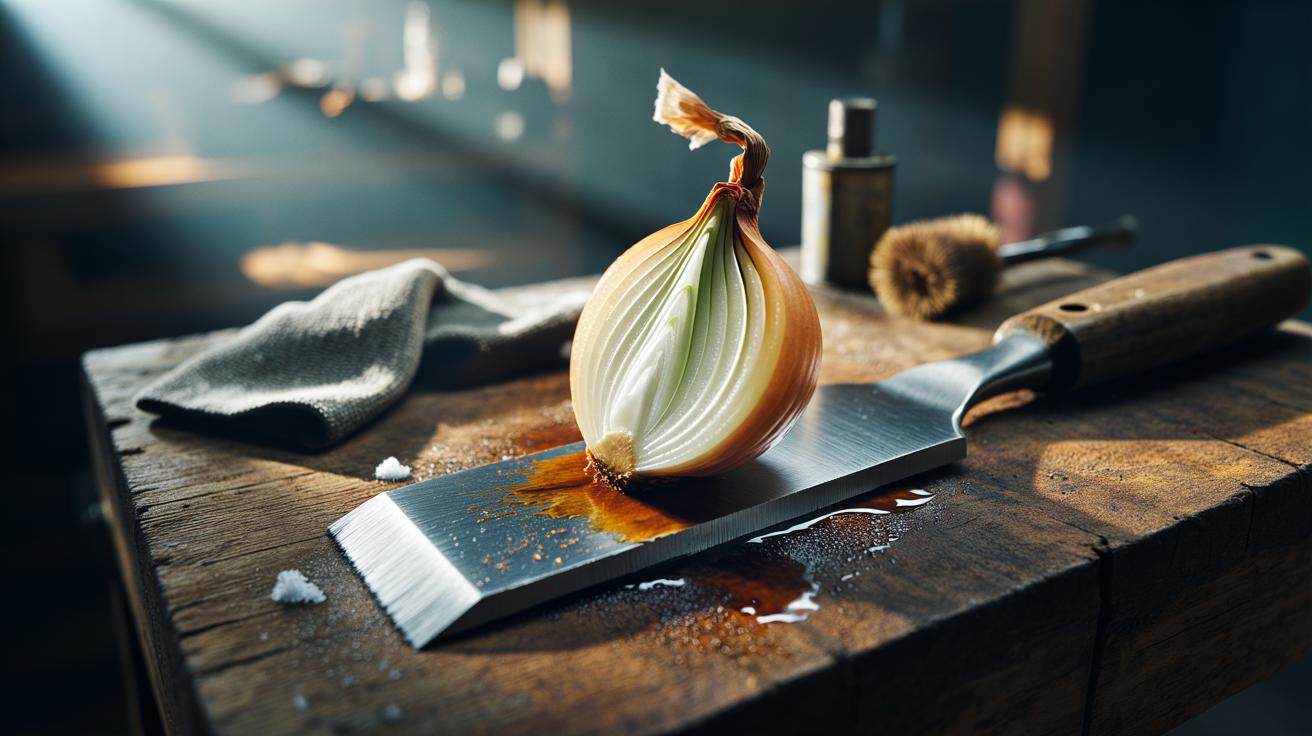
There’s a humble workshop hero lurking in your kitchen drawer. The onion. When blades spot orange freckles and pliers feel gritty, most of us reach for harsh chemicals or abandon the tool entirely. Yet a sliced onion, used with intention, can strip away corrosion and coax back clean, bright steel. It’s quick. It’s cheap. It’s oddly satisfying. The trick lies in the onion’s natural chemistry and gentle abrasion, which together loosen and dissolve surface rust without brutalising the metal beneath. Think of it as a soft reset for tired tools, preserving temper and character while evicting the oxide squatters. Here’s how the “onion overhaul” works—and why it deserves a place in your maintenance routine.
Why Onions Dislodge Rust: The Chemistry at Work
Onions are more than tear-inducing bulbs; they’re tiny chemical factories. When cut, they release sulfur-containing compounds and mildly acidic juices (roughly pH 5–6). That cocktail helps break the bond between iron oxides and the steel surface. The moisture softens rust, the acidity nibbles at oxide layers, and the sulfur species help mobilise residue. Meanwhile, the onion’s flesh acts as a micro-abrasive, scrubbing without gouging. It’s a gentle convergence of chemistry and texture that shifts rust while respecting edge geometry and tool temper.
Contrast this with aggressive removers that can pit steel or strip protective patina. Onions target loose, shallow corrosion rather than deep, structural oxidation. Add a pinch of salt and the effect increases: chloride ions accelerate oxide disruption and the crystals amplify abrasion. Sprinkle bicarbonate of soda if you want a softer scour and slight alkalinity to buffer acidity on delicate pieces. The result is controlled cleaning. Little risk, big payoff. For carbon-steel chisels, pruning shears, plane blades, and kitchen knives, the onion method offers a balanced, tool-friendly approach.
Step-by-Step Method for an Onion Overhaul
Start with a halved onion and a stable work surface. Wipe the tool to remove loose dirt, then inspect. Light surface rust responds best; scale or deep pitting may need pre-loosening with a nylon brush. Good prep makes the onion work smarter, not harder.
Rub the cut face of the onion along the rusty areas using steady, overlapping strokes. Re-slice the face to refresh juicy abrasiveness as it loads with oxide. For stubborn patches, dust on fine salt to boost scouring, or dot with a touch of bicarbonate for a milder rub. Keep strokes aligned with blade edges to avoid rounding. If tackling serrations or pivots, use a sliver of onion like a swab to get into crevices.
Let the juice sit for a minute or two, then scrub again with the onion or a soft cloth. Rinse under warm water or wipe with a damp rag to lift the brown slurry. Dry thoroughly—heat from a hairdryer helps purge hidden moisture. Immediately apply a protective film: camellia oil, mineral oil, or a light machine oil on tools; food-safe oil on kitchen knives. Seal the clean metal quickly, or the fresh surface will flash-rust before your tea cools.
How It Compares with Vinegar, Citric Acid, and Gels
Every rust remover has a profile. Onions deliver control, low odour, and convenience. They’re ideal for touch-ups, edge tools, and maintenance between full restorations. Vinegar and citric acid plunge deeper and faster, but can undercut patina, etch aggressively, or creep under scale into tight assemblies. Commercial gels target vertical surfaces and heavy rust yet demand care to avoid staining and overexposure. The table below maps the landscape so you can choose wisely, job by job.
| Method | Speed | Control | Patina Safety | Cost/Smell | Best For |
|---|---|---|---|---|---|
| Onion | Moderate | High | Good | Very low/mild | Light rust, edge tools |
| Vinegar | Fast | Medium | Fair | Low/strong | Soaks, hardware |
| Citric Acid | Fast | Medium | Fair–Good | Low/mild | Batch parts |
| Rust-Removing Gel | Fast–Very fast | Medium | Variable | High/chemical | Heavy scale, verticals |
For heirloom saws or infill planes where patina preservation matters, the onion’s restraint shines. For seized fasteners or flaking scale, stage your work: mechanical loosening first, then targeted chemistry. If you can smell success without smelling solvents, you’re probably holding a halved Allium cepa.
Safety, Patina, and Post-Restore Protection
Even gentle methods deserve good habits. Wear gloves to keep acids and onion odour off your skin, and take care with sharp edges when scrubbing. Avoid soaking wooden handles or horn; moisture can swell fibres and lift ferrules. Protect the tool’s history—remove active rust, not its earned complexion. That means stopping when you see sound grey steel and stable, dark patina. Overcleaning erases character and value, especially on vintage British steel.
After cleaning, neutralise smells with a quick wipe of diluted bicarbonate, then alcohol to drive out moisture. Dry. Warm. Oil. A thin coat of camellia oil, mineral oil, or paste wax arrests oxygen and humidity. On pruning tools, add a dab of lithium grease to pivots. Store with desiccant or VCI paper in drawers, and never trap damp in leather sheaths. Mark the date on a tag; maintenance recorded is maintenance remembered. Rust is patient—your routine must be patient and regular in return.
The onion overhaul won’t resurrect steel lost to deep pitting, but it excels at everyday prevention and sympathetic cleaning. It’s kitchen-common, workshop-ready, and disarmingly effective when you’ve only got ten minutes before the next job. Used thoughtfully, it protects edges, honours patina, and trims your chemical footprint. That’s a tidy win for both tool and user. Will you try a halved onion on your next spot of rust—and if you do, which tool in your kit will you test first to compare feel, finish, and effort?
Did you like it?4.6/5 (30)