In a nutshell
- 🍋 Why lemon works: Its citric acid dissolves alkaline grime, limonene loosens old waxes/oils, and a touch of oil “wets out” micro-scratches, instantly boosting sheen.
- 🧽 What it fixes vs. not: Great for surface stains, water rings, and fine scratches; not a cure for deep dents, UV bleaching, or sub-surface finish loss.
- 🛠️ Safe method: Mix 1:3 lemon juice to mineral oil, test first, wipe with the grain, then neutralise and buff; use mineral oil and avoid vegetable oils that can turn rancid.
- 🧰 Finish-specific care: Works gently on waxed/oiled, cautious on shellac, fine on lacquer and diluted for polyurethane; avoid bare wood/veneer edges and seek advice for antiques.
- ⚠️ Precautions: Woods rich in tannins (oak, walnut) benefit, but never use steel wool; choose bronze wool and skip lemons on cracked finishes where juice can creep under.
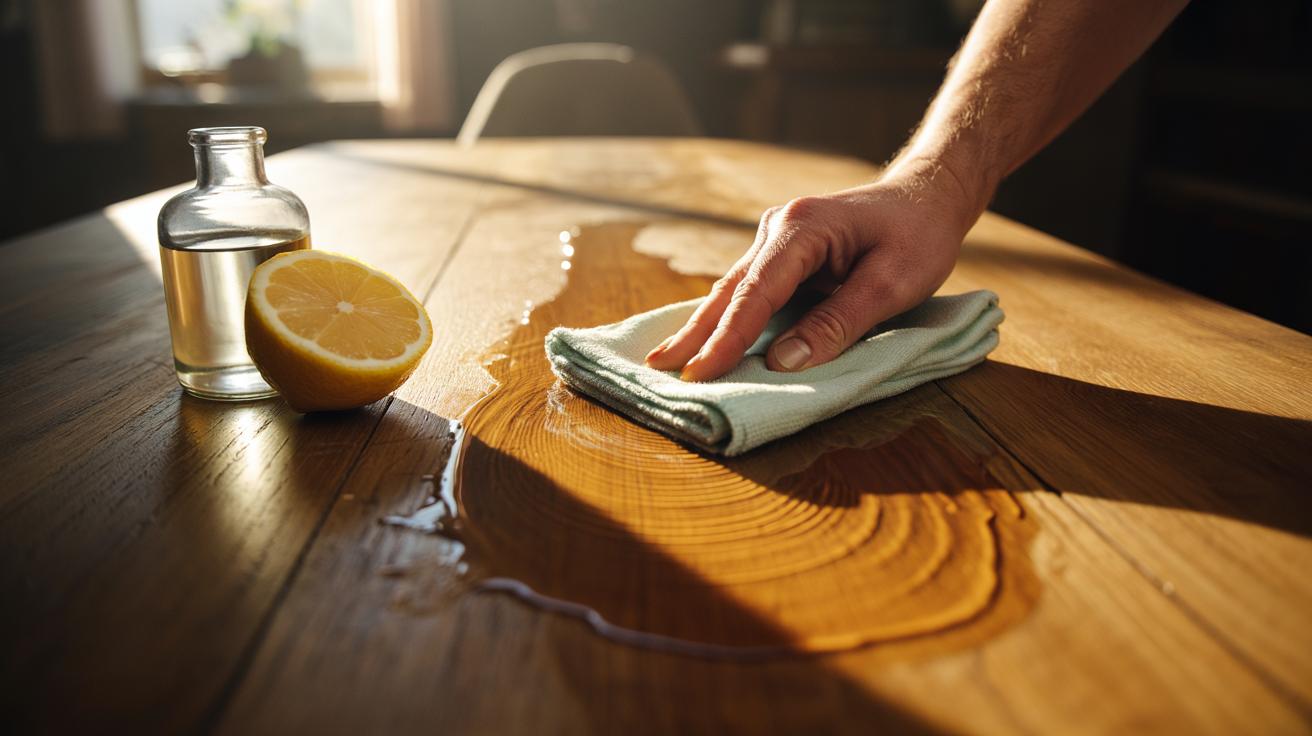
Lemon has a reputation in British homes that borders on folklore, yet there’s grounded science behind the shine. Slice one open and you unleash a cocktail of gentle acids and aromatic oils that seem to rewind time on tired timber. The result can be startling. Old rings fade, grime loosens, and fine scratches soften to a warmer glow. It isn’t magic. It’s chemistry, capillary action and common sense. Used properly, lemon can refresh a finish without stripping it. Used carelessly, it can do the opposite. Here’s why the fruit works so well on wood, how to deploy it responsibly, and when to step away and call a restorer.
How Lemon Works on Wood: The Chemistry Behind the Shine
The secret is citric acid. With a pH near 2, lemon juice dissolves alkaline residues from hands, food and cleaning sprays, lifting the dingy film that flattens a finish. That mild acidity also chelates iron traces in tap water and polishes, which helps reduce those grey-black halos and mineral marks that colonise table tops. Meanwhile, the zest holds limonene, a natural solvent that softens aged waxes and oils clinging to the surface. Together they unglue dirt, oxidised polish and microfilms, revealing the original lustre beneath.
There’s a second effect. When lemon is blended with a light oil, tiny molecules wick into the upper pores of the timber and the topcoat, visually “wetting out” micro-scratches so they appear shallower. It doesn’t fill a gouge. It refracts light differently. That’s why a lemon-oil wipe can look like an instant repair. Add friction from buffing and you generate a modest heat that levels smears and smudges, amplifying the glow without sanding or harsh solvents.
All this depends on the finish: waxed, oiled, shellac, lacquer or modern polyurethane. The gentler the coating, the more readily lemon will lift residues—and the more carefully you must work to avoid overdoing the clean.
Stains, Rings, and Scratches: What Lemon Can and Cannot Fix
Here’s the good news. Lemon often clears surface water rings, tea splashes, and the dull nicotine-yellow film that builds up in kitchens and dining rooms. It brightens a waxed top dulled by handprints and evaporated alcohol. A light pass can also reduce the visibility of fine scratches by rehydrating the surface and smoothing optical scatter. For mineral marks and cutlery shadows, the acid’s chelating action helps break their grip, so they wipe away instead of biting in.
But there are limits. Deep dents compress fibres; only steam or careful sanding will re-raise them. Finish loss—white blushing that sits under lacquer or shellac after heat—may need heat-gun finesse or a professional French-polish touch. UV bleaching is permanent colour change in the wood itself, not muck on the surface. No citrus will repaint sun-faded oak. And while a lemon-and-fine-salt paste can lightly abrade and blend feather scratches, it must be used sparingly and always along the grain to avoid dull tracks.
Think of lemon as a reversible tune-up, not a cure-all. If the finish is crazed, flaking or gummy, you’re past the point of pantry alchemy and into workshop territory.
A Safe, Step-by-Step Method for Lemon Polishing
First, gather: one fresh lemon, a small bottle of light mineral oil (food-safe, non-drying), a microfibre cloth, cotton buds, and a soft brush. Mix 1 part strained lemon juice with 3 parts mineral oil in a jar. Optionally, twist in a strip of zest for a dash of limonene, then remove it after five minutes.
Now test. Always trial on a hidden corner and wait five minutes. If colour lifts onto the cloth or the surface turns tacky, stop. If safe, dust the piece thoroughly. Dab the mix onto the cloth—never pour on the wood—and wipe in the direction of the grain with light, even strokes. Stubborn marks? Pause the cloth on the spot for 10–15 seconds, then move on. For hairline scratches, a fingertip of mix and a whisper of fine table salt can blend the edges; buff immediately to avoid haze.
After cleaning, remove the residue. Wipe with a barely damp cloth containing a drop of mild soap, then dry and buff to a sheen. This halts the acid’s action and leaves a protective, low-gloss glow. Avoid vegetable cooking oils, which can oxidise and smell; mineral oil stays stable. Repeat monthly on high-touch areas, seasonally elsewhere.
Finish-Specific Precautions and When to Avoid Lemon
Not all coatings are equal. A modern polyurethane table behaves differently from a Victorian sideboard dressed in wax and shellac. The matrix below summarises outcomes and cautions. When in doubt, consult a restorer before attempting any acidic cleaner on antiques.
| Finish | What Lemon Does | Precaution |
|---|---|---|
| Waxed/Oiled | Loosens grime, refreshes sheen, blends fine marks | Work lightly; re-wax after to rebuild protection |
| Shellac (French Polish) | Cuts haze; may soften thin layers | Very light, brief passes; never soak or scrub |
| Lacquer | Cleans finger grease, brightens gloss | Test first; heat or moisture rings may sit below surface |
| Polyurethane/Varnish | Removes film, restores clarity | Safe if diluted; avoid abrasive pastes |
| Bare Wood/Veneer Edges | Soaks in; can raise grain or stain | Avoid; seal first, and keep liquids off veneer seams |
Extra notes for oak and walnut: both hold high tannin levels. Lemon can actually reduce iron-tannin blackening by chelation, but never use steel wool—its fragments create fresh black spots. Choose bronze wool if you must cut back. And skip lemons on cracked finishes where the juice could creep under the film and cloud it from within.
Lemon succeeds because it is precise. A little acid, a touch of solvent, a whisper of oil—just enough to cleanse and coax the finish back to life without stripping heritage or character. That’s the journalist’s verdict from homes, workshops and conservation labs alike. Respect the material, test patiently, and stop as soon as the surface looks right. Your table earns back its glow. Your sideboard breathes again. The only question is how far you’ll go: will you keep it to a careful seasonal spruce, or experiment with a whole-house citrus revival, piece by piece?
Did you like it?4.5/5 (24)