In a nutshell
- 🍋 Science-led cleaning: Lemon’s citric acid (pH ~2) chelates minerals and softens Maillard residues, while peel oils rich in d‑limonene dissolve grease—freeing baked-on food in about five minutes.
- 🔥 Five‑minute method: Hot water + lemon juice, gentle 2–3 minute simmer, 2-minute rest, then a light scrape; add salt for mild abrasion or a late pinch of bicarbonate of soda for fizzing lift.
- 🧽 Surface savvy: Ideal for stainless steel, enamel, and glass; do not use on bare cast iron or carbon steel seasoning; limit contact on aluminium and avoid simmering on non-stick—always rinse and dry.
- 🌿 Eco and budget wins: One lemon tackles multiple cleans, reduces harsh chemicals and packaging waste; reuse rinds for boards or compost, and bottled juice with a bit of peel works too.
- ⚠️ Smart safety and technique: Let contact time do the work, don’t force it; leverage the capillary undercut effect, and never mix citrus with bleach—technique beats aggression.
Some kitchen messes feel immovable. Burnished caramel, polymerised oils, stubborn protein crusts welded to a pan after Sunday roast drippings. Yet a halved lemon and five patient minutes can turn defeat into gleam. This isn’t a folk tale; it’s chemistry you can smell. A swift citrus treatment softens, loosens, and lifts baked-on food without harsh fumes. The secret sits in the fruit’s sharp citric acid and grease-cutting d‑limonene, backed by a little heat and time. Think of it as a targeted reset for cookware, from stainless workhorses to enamelled favourites, gentle on the finish but ruthless with grime.
The Science Behind Citrus Cleaning
Lemon excels because its juice is rich in citric acid (typically pH ~2). That acidity attacks the bonds that make burnt-on residues cling: denatured proteins, cross-linked sugars from Maillard browning, and mineral films from hard water. Acids chelate metal ions such as calcium and magnesium, weakening the “cement” that helps grime adhere. With the scaffolding compromised, heat and light agitation finish the job. This is why lemon can shift stubborn layers in about five minutes.
The peel brings another punch. Lemon rind contains d‑limonene, a natural solvent that dissolves greasy fractions. Unlike heavy-duty petrochemical degreasers, citrus oil disperses lipids while the acid phase infiltrates and swells carbonised patches. Add hot water and you increase molecular motion, letting acid penetrate micro-cracks faster. Steam lifts. Chemistry pries. The residue surrenders.
There’s also a capillary effect. When hot lemon solution reaches the interface between carbonised food and metal, it wicks underneath, reducing friction and adhesion. Think of it as a controlled undercut. Contact time is your multiplier: set a timer, don’t scrub blindly.
How to Use Lemon for Rapid Pan Rescue
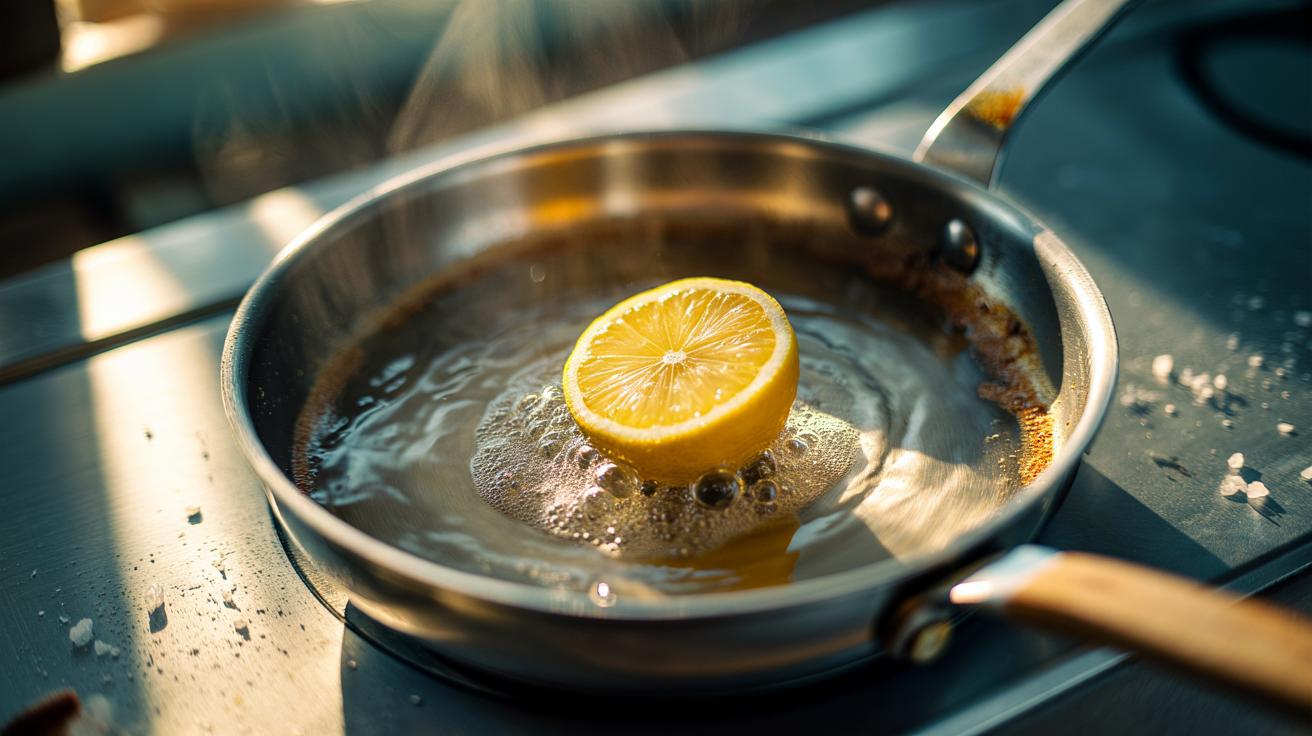
Work smarter, not harder. For stainless steel, enamel, and glass, cover the stuck area with a finger of hot water. Squeeze in half a lemon and drop the squeezed rind into the pan. Bring to a gentle simmer for 2–3 minutes. Kill the heat, let the citrus solution sit for another 2 minutes, then coax the loosened film with a wooden spatula. Five minutes, start to finish, is usually enough. For heavy carbon, repeat once rather than forcing it.
Boosts are simple and safe. A pinch of salt adds mild abrasion without gouging. For greasy pans, rub the cut lemon across the surface so peel oils release fresh d‑limonene. If you like fizz, sprinkle a little bicarbonate of soda after the acidic soak; the effervescence can nudge particles free, though it neutralises some acidity, so use it as a final nudge. Always rinse, then dry thoroughly to prevent spotting.
| Step | Action | Why it works |
|---|---|---|
| 1 | Hot water + lemon juice | Acid penetrates; heat accelerates diffusion |
| 2 | Simmer 2–3 minutes | Softens Maillard films; chelates minerals |
| 3 | Rest 2 minutes | Contact time lets chemistry work |
| 4 | Gentle scrape and rinse | Freed particles slide off cleanly |
Safety, Surface Compatibility, and Limits
Not every pan wants an acid bath. Do not use lemon on bare cast iron or carbon steel seasoning; acid will strip the protective oil layer and invite rust. For these, wipe out, simmer plain water if needed, and re‑season. Go easy on aluminium: brief, cool contact is usually fine, but prolonged acidic soaks can pit or dull the surface. Non‑stick coatings tolerate mild citrus at low heat, but skip the simmer and use warm juice with a soft sponge.
Stainless steel, enamel, and heatproof glass are ideal candidates. Copper? Lemon can shine it up, though you’ll remove patina, so be intentional. Always avoid mixing citrus with chlorine bleach; the combination can release irritating gases. If an especially thick polymerised layer refuses to budge after two cycles, don’t escalate with brute force. Switch tactics: a long warm-water soak or a specialty paste. Technique beats aggression, and your cookware lasts longer for it. Rinse and dry immediately to protect finishes.
Cost, Sustainability, and Kitchen Economics
There’s a pleasing thrift to lemons. One fruit yields enough citric acid and d‑limonene for several rescues, often costing less than a pound. Compare that with proprietary gels promising miracles yet delivering fumes, residue, and plastic waste. Citrus cuts packaging and reduces reliance on harsher surfactants. The scent is bright, not cloying, and the rinse water is friendlier to drains. That matters in compact British homes where ventilation is limited and cupboards are crowded.
Waste not, want not. After cleaning, use the spent rind to freshen chopping boards, then drop it in the compost. If you prefer consistency, bottled lemon juice works; pair it with a sliver of peel for the solvent effect. The equation is simple: short contact time, low cost, high impact. It’s the sort of everyday science that quietly pays for itself and keeps pans in rotation rather than in the bin.
There’s genuine satisfaction in watching a browned, stubborn pan release its grip under a lemon’s quiet insistence. Few kitchen tricks combine immediacy, safety, and science so neatly. Five minutes, a little heat, and targeted acidity restore surfaces while sparing your shoulders and your budget. Citric acid does the heavy lifting; you do the timing. The result is a pan ready for its next job and a cook who kept their cool. Which cookware in your kitchen is begging for a five-minute citrus test today, and how will you try it first?
Did you like it?4.5/5 (24)