In a nutshell
- 🪙 Cheap foil trap pairs acetic scent with shiny reflections to lure fruit flies and drown them in minutes for pennies.
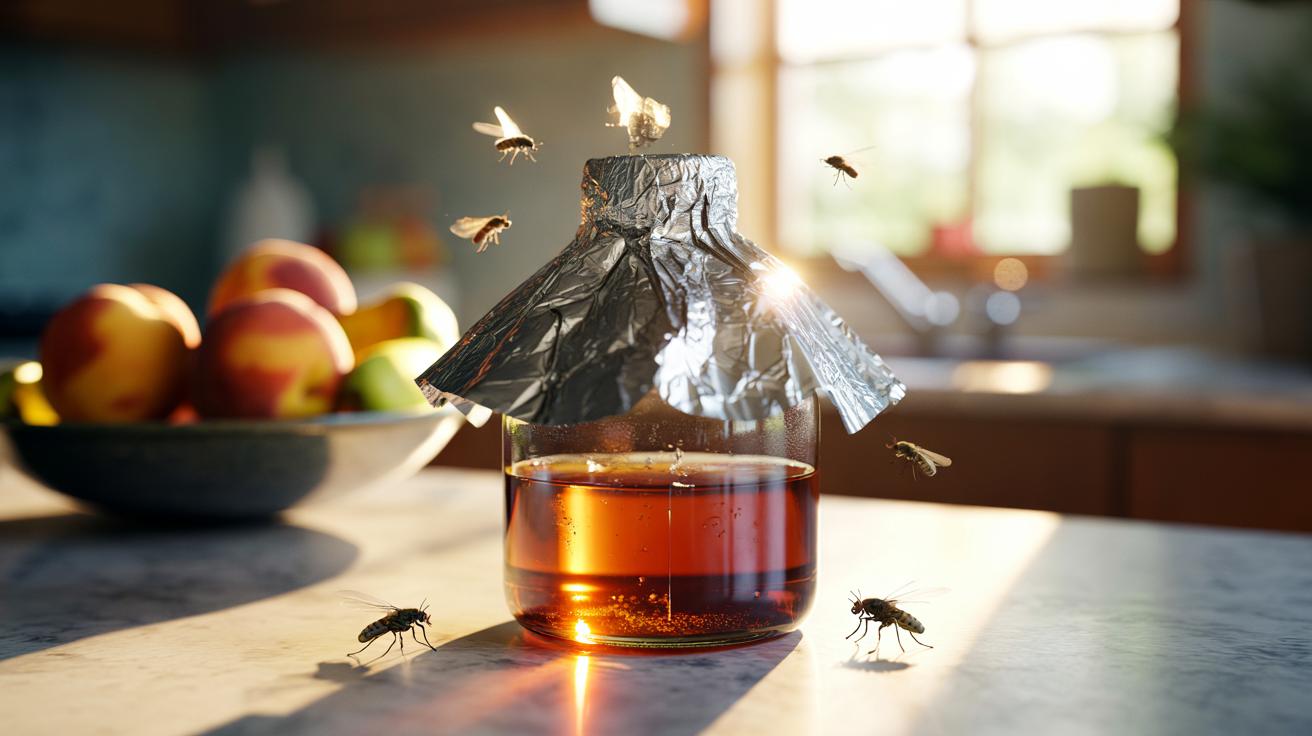
- 🛠️ Simple setup: jam jar, crumpled foil cone with a 2–3 mm tip, 2–3 cm of apple cider vinegar, plus a drop of washing‑up liquid to break surface tension.
- 🔬 Why it works: crinkled foil creates specular reflections that mimic moist fruit glints; smell draws them in, geometry funnels them, and soap stops escape.
- 📍 Smart placement: set traps by fruit bowls, compost caddies, or bins; angle light onto the cone, avoid draughts, and refresh bait daily for fastest knockdown.
- ⚠️ Common pitfalls & fixes: oversized hole, weak bait, or too little soap—use a 2–3 mm aperture, fresher vinegar, an extra drop of detergent, and deploy multiple small traps.
Fed up with fruit flies orbiting your fruit bowl like it’s a tiny aerodrome? There’s a cunning fix that costs pennies and works frighteningly fast: a cheap foil trap. Using crumpled kitchen foil, a jam jar, and a dash of bait, you can pull in Drosophila within minutes and keep them from coming back. The trick isn’t just the smell of fermenting liquid; it’s the way foil reflects light, guiding flies straight towards what they think is a safe landing zone. This simple, shiny lure turns your countertop into a one-way street for pests. Here’s why the foil works, how to build the trap in less than five minutes, and how to tune it for ruthless efficiency.
How a Foil Trap Works in Minutes
Fruit flies are hard-wired for two things: fermentation scents and handy places to perch. A classic vinegar-and-soap bait pumps out acetic acid and faint ethanol notes, the chemical signature of rotting fruit. Foil supercharges that lure by manipulating light. Its crinkled surface throws sharp, moving highlights as room light shifts, creating the kind of flicker and contrast that small flies investigate. The bright points resemble glints on moist fruit skin or the exposed flesh of a cut peach.
There’s more. A foil cone or foil-lined rim gives flies a high-contrast edge they naturally follow, funneling them towards the opening. Once they drop through, the dish soap in the liquid breaks surface tension so they can’t float and escape. The jar’s walls compound the trap by reflecting the bait’s light and scent back inwards, confusing their exit cues. Odour draws them in, glitter guides them down, and the slippery surface keeps them there. That three-step nudge is why kills start quickly—often within the first ten minutes.
Step-by-Step: Build a 50p Kitchen-Foil Trap
Grab a clean jam jar or tumbler, a square of kitchen foil roughly 20 cm across, apple cider vinegar (or red wine), and a tiny squirt of washing-up liquid. Pour 2–3 cm of vinegar into the jar. Add one drop of soap and swirl gently to avoid bubbles. The soap is essential; without it, many flies will skate across the surface and leave. Think of the bait as scent plus sink.
Now make the lure. Crumple the foil lightly, then smooth it back to leave a fine texture. Roll it into a cone with a pencil-sized hole at the tip and seat it in the jar neck so the point hovers 1–2 cm above the liquid. Those micro-creases create the sparkly highlights that attract flies from across the room, while the cone forces them into a narrow descent path. For heavy infestations, tape the cone to the jar for a tighter seal.
| Item | Approx. Cost | Purpose |
|---|---|---|
| Kitchen foil | £0.05 | Reflective lure; forms funnel |
| Jam jar | Free | Transparent chamber; smooth walls |
| Apple cider vinegar | £0.20 | Fermentation scent (acetic acid) |
| Washing-up liquid | £0.02 | Breaks surface tension |
Place the trap near the source—fruit bowl, compost caddy, or bin lid—for fastest results. You should see first captures quickly, then a steady taper as the population collapses.
The Science Behind Foil’s Strange Allure
Fruit flies use a blend of olfaction and vision to find food. Volatiles from fermenting fruit travel easily through still air, so the scent plume is the primary beacon. But once flies enter the final approach, they switch to close-range visual cues: contrast edges, sharp highlights, and dark-to-light transitions. Crinkled foil produces specular reflections—bright, pin-sharp flashes that imply texture and moisture. To a fly’s fast, motion-sensitive eyes, foil looks alive.
Studies on small dipterans show sensitivity peaks in the green spectrum and responsiveness to flicker and pattern edges. Foil’s microfacets act like hundreds of tiny mirrors, exaggerating flicker as you move or as daylight shifts. That’s why a foil cone often outperforms plain plastic wrap: it’s not just a barrier, it’s a beacon. Inside the jar, the glass amplifies these cues by bouncing light around, while the vinegar’s vapour gradient gets stronger the closer they fly. The result is a powerful multi-sensory funnel: smell draws, light confirms, geometry commits, and the soapy liquid ends the journey.
Common Pitfalls and Smart Tweaks
If your trap isn’t buzzing with captures, it’s usually down to hole size, bait quality, or placement. Too large a tip opening lets flies wander back out; aim for a hole about 2–3 mm. Too little soap means surface tension remains high—add a drop, swirl, and watch bubbles vanish. Stale or weak bait won’t broadcast far; refresh the vinegar daily and consider adding a pinch of sugar or a splash of old wine for a fruitier scent profile.
Location matters. Set traps near the action: the fruit bowl, compost bin, or recycling area where bottles are rinsed. Avoid strong draughts that disperse the scent plume. For very bright kitchens, angle a lamp so it grazes the foil cone; those extra highlights can double catch rates in the first hour. If you’re worried about pets, cover the jar sides with paper and leave only the cone visible. Finally, dispose of the contents every 48 hours, rinse, and re-bait. Multiple small traps beat one big one—spread them like nets for rapid knockdown.
In the end, the cheap foil trap works because it pairs irresistible chemistry with deceptive optics, guiding fruit flies from curiosity to capture in a handful of wingbeats. It’s frugal, fast, and oddly satisfying—especially when a swarm dissolves overnight. Keep one primed during late summer and whenever ripe fruit sits out, and you’ll stay ahead of the invasion. A bit of shimmer, a bit of scent, and the problem vanishes. What tweak will you try first—brighter foil, a sweeter bait, or a smarter trap placement to outwit your resident squadron?
Did you like it?4.4/5 (29)