In a nutshell
- 🌿 Onion peels deter pests by releasing sulfur-rich volatiles that mask host plant scents, reducing aphid, thrip and mite settling—effective nudgers, not nukers.
- 🧪 Make an onion peel spray: steep or simmer, dilute 1:3, add a drop of eco soap, patch test, and avoid spraying flowers to protect pollinators.
- 🛠️ Use multiple methods: spray for foliage pests, mulch to deter crawlers and reduce splash, and a tea drench to discourage fungus gnat larvae in pots.
- 🛡️ Best against aphids, thrips, spider mites; limited on slugs, beetles and sawfly—combine with barriers, hand-picking, nematodes or fleece for gaps.
- ⏰ Timing and safety: apply at dawn/dusk, reapply after rain, store concentrate briefly in the fridge, keep away from pets, and fold into a broader IPM plan with predators and good hygiene.
It’s a homely habit with surprising clout: saving those papery onion peels rather than binning them. In UK gardens where slugs, aphids, and sap-suckers can undo months of patient work, these skins become a thrifty line of defense. Their scent is sharp. Their chemistry is busy. And their footprint is blissfully light compared with synthetic pesticides. From simple teas to surface mulches, onion leftovers can help nudge pests off course while keeping pollinators safer. This is not magic. It’s practical, accessible, and cheap. Done right, it folds neatly into an integrated pest management strategy that respects your soil, your harvest, and your budget.
Why Onion Peels Deter Garden Pests
Onions evolved a suite of sulfur compounds and polyphenols to survive hungry mouths, and the papery skins concentrate much of that chemistry. When rehydrated or bruised, peels release volatiles such as thiosulfinates and traces of quercetin-rich phenolics. These aromas can mask host plant signals, confusing pests that navigate by smell. Aphids, thrips, and spider mites rely on delicate chemoreception; a strong, alien smell persuades them to move along or delay settling. In pot tests and allotment trials, gardeners report fewer probing events and slower colony build-up on treated leaves. Not zero. Just less pressure, which matters across a season.
There’s also the texture and tannins. Dry peel fragments tucked around stems create a scratchy micro-barrier that many soft-bodied insects dislike. It’s subtle, yet useful when combined with attentive watering and tidy pruning. Think of peels as nudgers, not nukers, in the pest war. They won’t stop a determined invasion, but they often reduce early arrivals enough for ladybirds, lacewings, and hoverflies to take over. That’s the quiet victory: stabilising the ecosystem so natural predators can finish the job without you reaching for harsher measures.
How to Make and Use an Onion Peel Spray
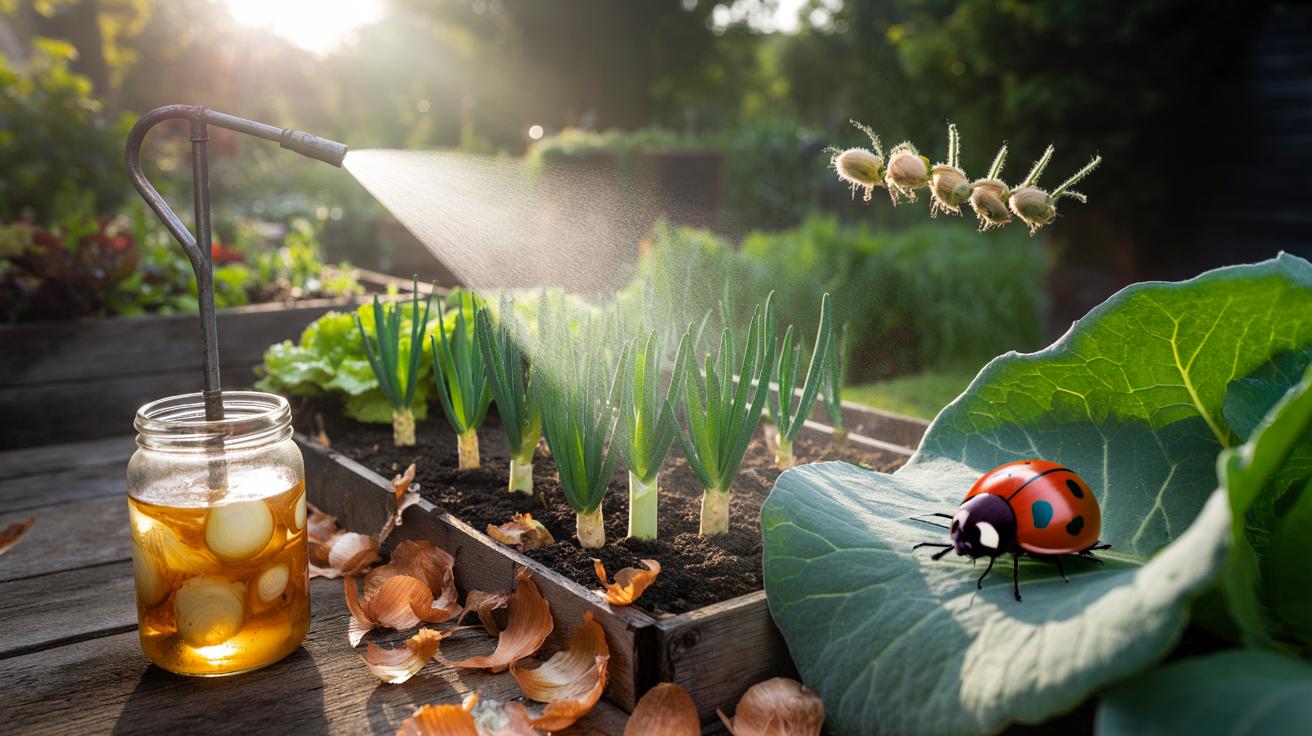
Save the outer skins from red, white, and brown onions. Fill a jar halfway with peels, top with rainwater, and leave to steep 24–48 hours. For a stronger batch, simmer peels in water for 10 minutes, cool, then strain through muslin. Dilute the liquid 1:3 with water and add a tiny squirt of eco-friendly soap to help it cling. Pour into a clean sprayer. That’s it. Always test on one leaf first and wait 24 hours for any scorch. If clear, spray the underside of leaves where pests congregate.
Timing matters. Apply in the early morning or at dusk when evaporation is slow. Do not spray open blooms; protect pollinators and beneficials by avoiding flowers altogether. Reapply after heavy rain and at weekly intervals during peak pressure. Target soft growers—lettuce, brassicas, beans, roses—especially new growth that pests prefer. Keep residue off edible parts before harvest and rinse produce as normal. Store the concentrate in the fridge for up to a week; the aroma fades. When it does, compost the spent peels and brew a fresh batch. Simple, circular, effective.
Mulch, Tea, or Trap Crop? Choosing the Right Method
Sprays aren’t the only path. A handful of dry onion peels scattered as a surface mulch can subtly deter crawling pests at soil level while reducing splash-back of spores. Alternatively, a weak “tea” used as a soil drench can discourage fungus gnat larvae in pots by making the top layer less inviting. In beds, pair peel tactics with sacrificial plants—nasturtiums for aphids, mustards for flea beetles—to draw fire away from salads and brassicas. Match the method to the pest pressure and the plant’s stage of growth.
| Method | Best For | Duration | Pros | Cautions |
|---|---|---|---|---|
| Spray | Aphids, thrips, mites on leaves | 3–7 days | Fast, targeted, low-cost | Patch test; avoid blooms |
| Mulch | Crawlers, soil splash | 1–3 weeks | Easy, compostable, moisture-saving | Wind can move peels |
| Tea Drench | Fungus gnats in pots | 1–2 weeks | Targets larvae zone | Don’t overwater |
For best results, rotate tactics. Use a light peel mulch around susceptible seedlings. Spray new flushes of leaves after rain. Refresh drench on indoor containers if gnats reappear. Keep records: date, weather, pest counts. Patterns emerge fast, and your timing becomes sharper. That’s how a kitchen scrap turns into a disciplined routine that steadily trims your pesticide use.
What Pests It Helps Against—and Where It Falls Short
Expect the biggest gains against aphids, thrips, and spider mites, which hate strong sulfur notes and disrupted scent trails. Onion peel tactics also help on roses, beans, and brassicas when colonies are just forming. You may see fewer leaf miner strikes on allium-adjacent beds, likely from masking effects. Treat early, before populations explode, and you tilt the season in your favour. That said, peels will not demolish hard-shelled beetles, sawfly larvae, or determined slugs on a wet June night. For those, use barriers, hand-picking, beer traps, nematodes, or fleece covers.
Fold peels into broader IPM: encourage predators with mixed planting and water sources, net brassicas against butterflies, space plants for airflow, and deadhead to break pest cycles. Keep pots raised and tidy; mulch sensibly to protect soil life. Take care with pets—onions are toxic if eaten in quantity, so don’t leave concentrated peels where dogs can snack. And mind the weather. Hot, bright days can intensify residues and risk scorch on tender leaves. Spray cool, spray light, and watch the plant, not the clock. Real success is cumulative—a few fewer pests each week, not a single dramatic knockout.
Using onion peels to repel bugs is quiet, frugal resilience: less spray bottle bravado, more patient gardening. Your soil stays livelier. Beneficial insects keep working. The kitchen bin gets lighter. Small wins compound into healthier beds and better harvests, especially when you act early and keep notes. If you’ve tried peels as a spray, mulch, or drench, what timing, mixtures, or companion tactics have given you the clearest, repeatable results in your own patch?
Did you like it?4.5/5 (28)