In a nutshell
- 🌱 Eggshells act fast via pH micro-buffering at the root zone, improving leaf turgor and surface aeration overnight, while sharp grit offers immediate slug deterrence.
- ⚗️ Composition matters: shells are ~95% calcium carbonate with trace minerals; finely ground particles increase surface area, enabling quick chemical effects and slower, sustained calcium nutrition.
- 🧂 Prep and application: rinse, dry, and bake, then grind as fine as possible; use light topdressings (teaspoon per small pot; a cup per m² for beds) or a simple overnight shell tea for targeted watering.
- 🪴 Best matches and cautions: tomatoes, peppers, brassicas, and container crops benefit; avoid on acid-lovers (blueberries, azaleas) and be careful on alkaline/chalk soils or with potatoes prone to scab.
- 🧪 Myths vs reality: eggshells aren’t a full fertiliser or instant cure; they deliver quick surface improvements and gradual calcium build-up—use small, frequent, well-placed applications for reliable results.
Cracking eggs for breakfast can quietly bring a hidden bonus to your border or balcony. Those pale, papery shells are rich in calcium carbonate and, when crumbled, they act on the soil faster than you might expect. Gardeners talk about “overnight” improvement. That isn’t magic. It’s physics, chemistry, and a little bit of biology. Finely crushed shells dissolve enough to tweak pH at the root zone, change moisture dynamics at the surface, and discourage soft-bodied pests. The immediate lift you see the next morning is usually a perkier canopy and steadier turgor, not a miracle growth spurt. Used thoughtfully, eggshells are a simple, circular, and very British kind of thrift.
What Makes Eggshells Work So Quickly?
The eggshell is roughly 95% calcium carbonate (CaCO3), with traces of magnesium and phosphates. When you crumble or powder it, you create countless fresh edges. Rain or watering lays a thin film over these particles. A minute amount dissolves, nudging acidity in the rhizosphere and improving the availability of nutrients that were locked up at too-low pH. Roots react fast to that micro-buffering. Leaves hold themselves higher. Stems look less limp. This is the “overnight” part: a quick change in conditions at the surface, not an instant injection of calcium into every cell.
There’s more. White chips reflect light, slightly warming dark potting mixes and extending dawn’s brightness around tiny seedlings. The gritty texture improves the skin of the soil, reducing crusting so oxygen can move freely. Slugs and snails dislike crossing sharp fragments, which protects tender growth while roots settle. None of this replaces balanced nutrition. Eggshells are not a full fertiliser. They are a buffer, a deterrent, and a structure tweak that combine to create better overnight conditions. Calcium uptake itself remains a slower, steady process that unfolds over weeks.
| Effect | What Happens | Timeframe |
|---|---|---|
| pH micro-buffering | Fine particles dissolve slightly, easing acidity | Hours to 1 day |
| Slug deterrence | Sharp grit discourages grazing | Immediate |
| Calcium nutrition | Slow dissolution feeds plants | Weeks to months |
| Soil skin improvement | Less crusting, better aeration | Days |
How to Prepare and Apply Crumbled Shells for Maximum Impact
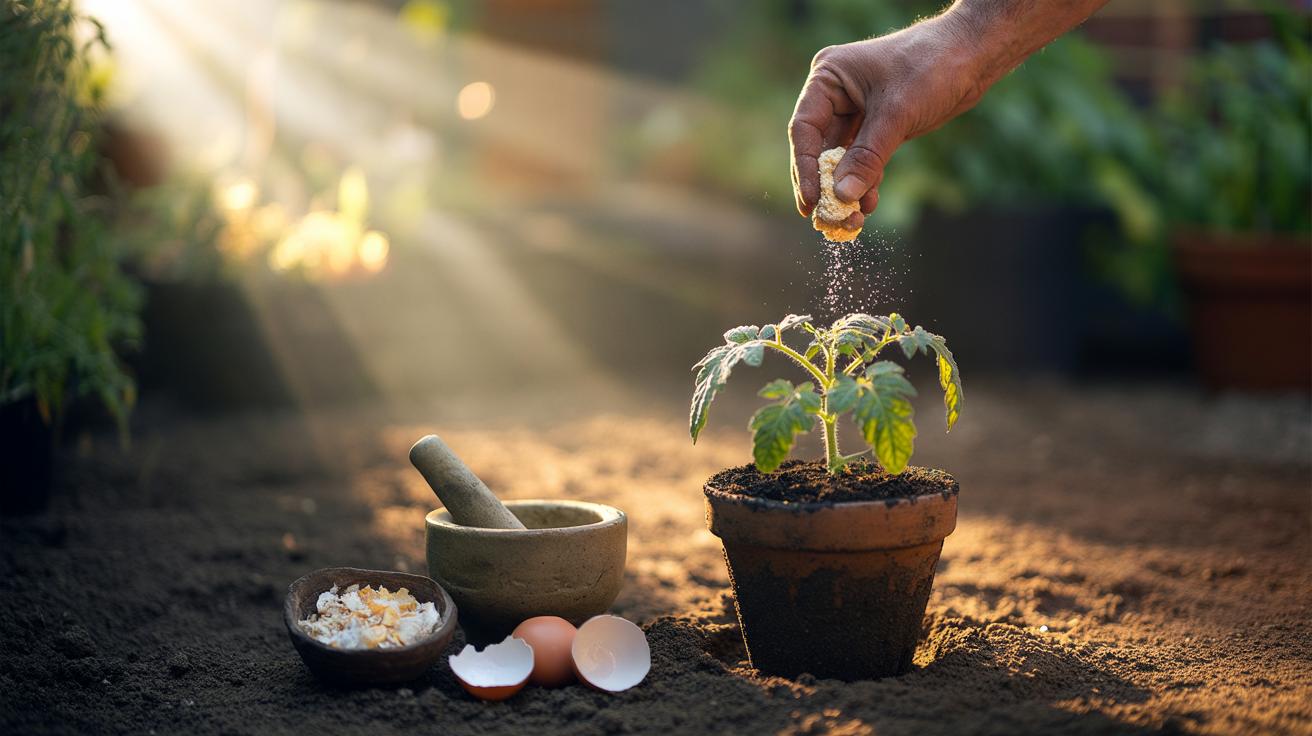
Start clean. Rinse shells, then dry thoroughly. To sterilise and make them brittle, bake at 120–150°C for 10–15 minutes. Now the crucial step: grind. The finer the grind, the faster the surface chemistry works. A mortar and pestle is fine; a blender turns them to powder in seconds. For potted plants, sprinkle a thin pinch—about one teaspoon for a 12 cm pot—across the surface, then water in. For beds, aim for roughly one cup of fine shell per square metre worked lightly into the top 2–3 cm of soil.
If you want a fast effect for seedlings or wilting transplants, dust a halo of powder around the stem and mist gently. The film that forms as it wets provides that quick pH nudge where new roots are probing. For a gentler, brewed option, steep two tablespoons of powder in a litre of water overnight, then use the liquid for spot-watering at the root zone. Go easy on chalky or already alkaline soils, where extra lime can lock out iron and cause yellowing leaves. Partner shells with compost or a balanced organic feed; the shell’s slow calcium complements nitrogen and potassium from richer amendments without overwhelming the mix.
Plants and Soils That Benefit (and Those That Don’t)
Tomatoes, peppers, aubergines, courgettes, and brassicas appreciate steadier calcium availability, especially in containers where watering swings are dramatic. The topdressing helps prevent the conditions that lead to blossom end rot in fruiting crops, mainly by smoothing pH and moisture rather than acting as a miracle cure. Salad leaves perk up after a shell dusting when nights turn cool and damp, partly thanks to slug deterrence. In heavy clays, the grit lightens the top crust; in sandy mixes, it adds a tiny bit of persistence after rain. Houseplants respond too. A whisper of powder on the soil of peace lilies or geraniums can brighten foliage within a day or two.
Some plants, though, say no thank you. Acid-lovers like blueberries, azaleas, rhododendrons, camellias, and heathers prefer low pH and may sulk if you add lime-rich material. Potatoes often scab on alkaline ground, so avoid shells on spuds unless your soil is distinctly acidic. If you garden on limestone or chalk, test your pH before starting; you may already be at the upper limit for nutrient availability. Use shells where they correct a problem, not as a blanket ritual. Think of them as a targeted tool: fast-acting at the surface, slow-feeding underneath, and most helpful where pots, seedlings, and slug pressure collide.
Myths, Evidence, and Realistic Expectations
Let’s ground the folklore. Eggshell calcium dissolves slowly at neutral pH, which is why coarse shards in compost sift back at you months later. Powder changes the game by multiplying surface area. That’s why gardeners report visible improvements overnight after dusting: the chemistry can finally meet the roots. Still, not everything you’ve heard stacks up. Shells alone won’t replace a balanced feed, repair compacted subsoil, or instantly heal a severe deficiency in mid-season fruit. They shine in the margins—exactly where growth is won or lost.
Evidence from soil science supports the mechanisms: surface pH shifts, ionic balance around root hairs, and improved moisture films each have rapid, measurable effects. Pest deterrence varies by species and weather, yet many growers swear by the gritty barrier during wet spells. Hygiene matters. Wash and dry shells to avoid odours and pests, especially in urban gardens. And remember moderation. You’re adding limestone in miniature. Small, frequent, well-placed applications beat one big dump every time. Keep expectations sharp and practical: a livelier canopy by morning and sturdier growth in the week ahead, with solid calcium reserves building quietly below.
The charm of crumbled eggshells lies in thrift and timing. A breakfast by-product becomes a precision tweak for your beds and pots, giving seedlings a friendlier surface, crops a steadier pH, and slugs a reason to snack elsewhere. Simple, local, nearly free. That’s hard to beat in any British garden. Used judiciously and ground fine, shells deliver quick visual wins while laying down longer-term calcium. Will you try a light dusting after your next omelette, keep notes for a week, and see which of your plants responds first?
Did you like it?4.4/5 (30)