In a nutshell
- 🔬 Acetic acid in vinegar acts as a contact herbicide, rapidly desiccating leaf tissue in minutes; it burns top growth but doesn’t kill deep roots, making it most effective on young seedlings and annuals.
- 🧪 Choose the right strength: 5%–20% (household to horticultural) for faster burns; add a drop of surfactant (washing-up liquid) for adhesion, avoid salt, and use precise tools like sprayers, foam brushes, and shields.
- ⏰ Timing matters: apply on warm, sunny, dry days—ideally midday; avoid dew or rain, repeat on perennials to exhaust reserves, then block new growth with mulch and dense planting.
- 🛡️ Prioritise safety: higher strengths are corrosive; wear gloves and eye protection, keep pets and children away until dry, and remember vinegar is non-selective, so shield ornamentals and rinse nearby metals.
- 🇬🇧 Be compliant and strategic: in the UK, use authorised products for weed control and pair quick vinegar knockdowns with hoeing, edging, and prevention for integrated weed control.
British gardeners love a quick fix, especially when weeds surge after rain. One household staple promises dramatic speed: vinegar. Within minutes of contact, many young weeds crumple, brown, and stop growing. It looks like magic. It isn’t. It’s chemistry. Acetic acid, the active component in vinegar, disrupts cells, drawing water out and collapsing delicate tissues. Used smartly, it’s an effective part of an integrated routine. Used carelessly, it can scorch prized plants, harm skin, and fail on deep-rooted perennials. Speed without strategy wastes effort. Here’s how vinegar destroys growth fast, where it shines, where it struggles, and how to apply it safely for near-instant results.
How Acetic Acid Burns Weeds in Minutes
Most table vinegar contains about 5% acetic acid. This weak organic acid penetrates the leaf cuticle, denatures proteins, and ruptures cell membranes. The result is rapid desiccation. On warm, sunny days, evaporation accelerates the process, concentrating the acid at the leaf surface and intensifying the burn. That’s why the effect seems almost cinematic: sheen fades, leaves pucker, colours dull, tissue collapses. Vinegar is a contact herbicide, not a systemic one. It kills what it touches, not the root system beneath.
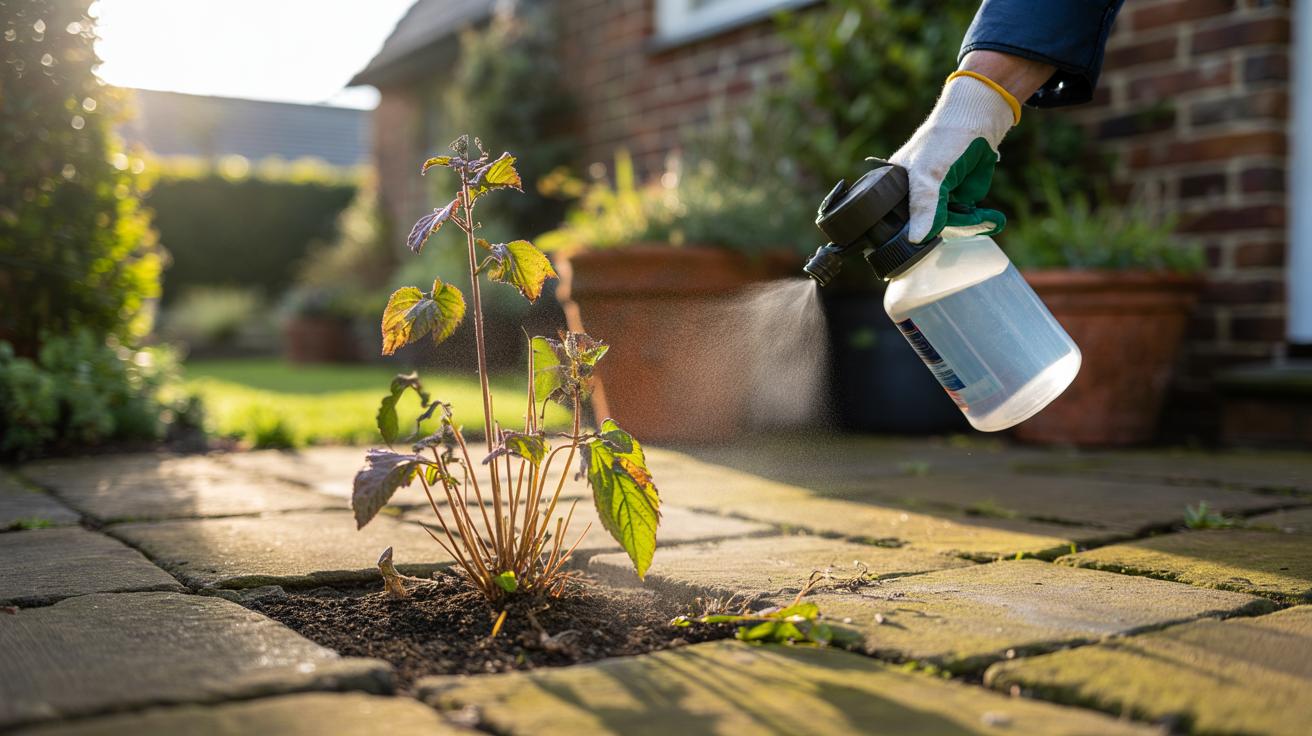
Speed varies by plant age and species. Tender seedlings and annuals inside paving cracks succumb in under an hour; waxy or hairy leaves resist longer. Perennials with taproots, such as dandelions and docks, often regrow because their crowns remain viable. Repeat spot-treatments can starve the plant by exhausting leaf regrowth, but persistence is required. Heat and low humidity help; drizzle and dew don’t. The acid is quickly neutralised by water and soil buffers. Expect showy top-burn on the same day, yet plan for follow-up or physical removal to prevent rebounds.
Choosing the Right Vinegar and Method
There are three broad strengths a gardener may encounter. Distilled white vinegar (5%) is common and inexpensive. Horticultural vinegar (10–20%) is far stronger, delivering faster burns but requiring far stricter precautions. For adhesion, a drop of washing-up liquid acts as a surfactant, wetting glossy leaves so acid spreads rather than beads. Avoid adding salt: it lingers, harms soil life, and can sterilise beds. Application matters. Use a trigger sprayer for paving cracks, a foam paintbrush or wick applicator to target leaves in borders, and cardboard shields to protect ornamentals. Precision beats power every time.
| Strength (% Acetic Acid) | Typical Product | Best Targets | Visible Effect | Re-sprout Risk | Safety Notes |
|---|---|---|---|---|---|
| 5% | Distilled white vinegar | Seedlings, annuals in cracks | 15–60 minutes (warm, dry) | Moderate on perennials | Mild irritant; avoid drift onto lawn |
| 10% | Horticultural vinegar (diluted) | Tougher young weeds, ivy tips | 10–30 minutes | High on deep-rooted weeds | Wear gloves/eye protection |
| 20% | Horticultural vinegar (concentrate) | Established weeds on hardscape | 5–15 minutes | Very high without repeats | Corrosive; handle with extreme care |
A simple garden-ready mix: 1 litre of 5% vinegar plus 1–2 teaspoons of washing-up liquid in a labelled sprayer. For stubborn patches, step up to 10% solutions sold as weed controls and follow the label exactly. Always test on a small area first.
Timing, Weather, and Safety You Must Consider
Pick your moment. Midday to mid-afternoon on a dry, bright day is ideal. Leaves are open, moisture is low, and the sun turbocharges desiccation. Do not spray before rain or when dew clings to foliage; dilution blunts the burn. Work on small, actively growing weeds. Re-treat perennials as soon as fresh leaves appear to drain their reserves. Edge beds and mulch after treatment to block light and prevent new germination. Hit quickly, then deny the soil a chance to feed the next wave.
Respect safety. Even kitchen vinegar stings eyes; horticultural strengths are corrosive. Wear gloves, sleeves, and eye protection. Keep pets and children away until leaves are dry. Vinegar is non-selective: it will scorch lawns, herbs, and roses as readily as chickweed, so shield ornamentals with cardboard or a handheld spray shroud. On patios, rinse metal fittings to avoid corrosion. In the UK, use only acetic-acid products authorised for weed control and follow the label; household vinegar is a cleaner, not a licensed herbicide. For long-term prevention, combine targeted sprays with hoeing, dense planting, and 5–7 cm of mulch.
Vinegar can look like an instant miracle, and for the right weeds it nearly is: a fast, visible stop to growth in minutes. Yet the real win comes from pairing that rapid top-burn with timing, accuracy, and follow-through that prevents regrowth and fresh seedlings. Put simply, use vinegar to knock weeds down, then your gardening habits to keep them down. What patch of your garden would benefit most from a quick, precision vinegar strike this week—and how will you lock in the gain afterwards?
Did you like it?4.6/5 (20)