In a nutshell
- 🌿 Household vinegar’s acetic acid acts as a fast-acting contact herbicide, scorching leaves and halting photosynthesis on young weeds within hours.
- ⚗️ Strength and timing matter: use 5% for small annuals, consider 10–20% for tougher foliage, and spray in warm, sunny, dry conditions for best results.
- ⏱️ It’s non-selective and leaf-only: expect quick top burn but limited impact on roots; resilient perennials may regrow and need repeat treatments.
- 🛡️ Prioritise safety and precision: wear PPE, avoid wind, add a tiny surfactant drop for coverage, and never mix vinegar with bleach.
- 🚫 Think sustainability: target hard surfaces, avoid salt in DIY mixes, combine with mulch and hand weeding, and choose other methods for deep-rooted perennials.
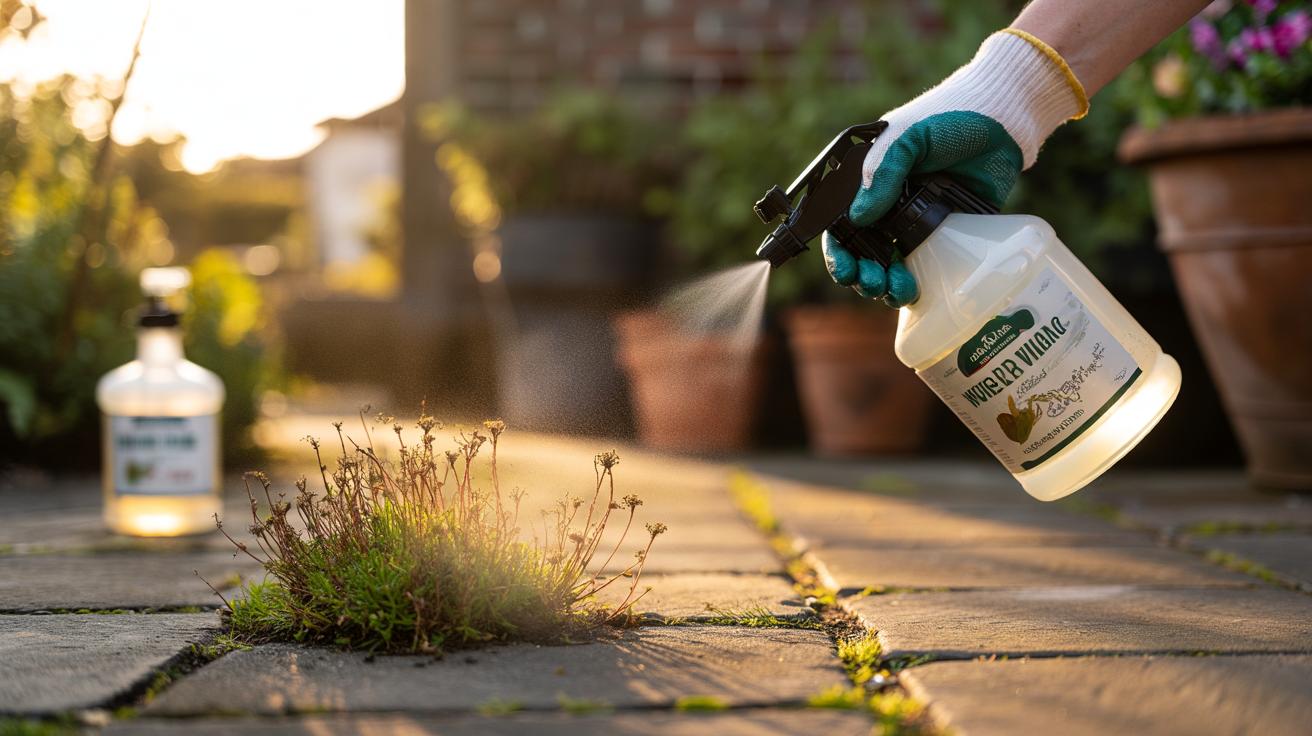
Britain’s pavements, patios and allotment paths are sprouting green interlopers again, and many gardeners want a quick, inexpensive remedy that doesn’t involve synthetic chemicals. Enter everyday vinegar. The clear liquid under your sink can scorch unwanted seedlings and street-side tufts within hours, leaving brown, shrivelled foliage and a satisfying sense of control. It’s simple, low-cost, and instantly available. Yet behind that apparent magic lies a tidy bit of plant science and sensible technique. Used wisely, vinegar is a fast-acting, non-selective tool that targets leaves rather than roots. Here’s how it works, when it shines, and when to choose a different plan.
How Vinegar Burns Through Weeds
The active component of household vinegar is acetic acid—usually around 5%. This weak acid acts as a contact herbicide. It penetrates the protective cuticle, disrupts cell membranes and draws water from the tissues. In plain terms, it desiccates the leaf. Photosynthesis halts. Respiration falters. Cells collapse. The result is rapid, visible wilt on tender foliage, often in the same day if conditions are warm and sunny. That “instant” effect is dramatic because young weeds have thin cuticles and shallow energy reserves.
Crucially, vinegar doesn’t move systemically within the plant. It rarely reaches or kills established roots. Perennial weeds such as dandelion, dock or couch grass may blacken above ground yet rebound from their underground stores. For small annuals—chickweed, bittercress, newly emerged grasses—vinegar can be ideal. For older, waxy, or hairy leaves, adding a tiny dash of surfactant (a drop of washing-up liquid) helps droplets spread, but restraint matters. Vinegar is non-selective. Any green tissue it touches, including ornamentals and lawn edges, is at risk. Shield desirable plants, target leaves only, and expect repeat hits on resilient species.
Choosing the Right Strength and Timing
While pantry vinegar (5%) has a reputation for speed on small annuals, horticultural products containing 10–20% acetic acid exist and work faster. With strength comes risk: higher acidity increases the hazard to skin, eyes and nearby plants, and it demands excellent aim. Sunlight, heat and dry air amplify the desiccation, making midday in warm weather a potent window. Early morning dew dilutes droplets; rain within 24 hours reduces efficacy. A simple principle holds: strike weeds when they’re small, growing actively, and unshaded.
Use the gentlest strength that achieves consistent browning within a day. In shade or on tougher leaves, a second pass after 48 hours helps. Avoid spraying into wind; coarse droplets from a hand sprayer or trigger bottle reduce drift. Don’t flood soil: you’re treating foliage, not irrigating acid. For legal and safety clarity in the UK, check labels and consider an approved acetic-acid weedkiller for formal use; kitchen vinegar isn’t registered as a pesticide. Below is a quick reference.
| Vinegar Strength | Typical Product | Effect Speed | Best Targets | Risk Level |
|---|---|---|---|---|
| 5% acetic acid | Household vinegar | Hours on young leaves | New annuals, patio joints | Low–moderate |
| 10–15% acetic acid | Horticultural vinegar | Rapid, tougher foliage | Larger annuals, soft perennials’ tops | Moderate–high |
| 20–30% acetic acid | Professional-grade | Very fast, harsh | Stubborn tops, spot work | High—PPE essential |
Safe, Smart, and Sustainable Use
Vinegar feels benign because it sits in our kitchens, yet concentrated acetic acid can burn. Wear gloves and eye protection. Keep pets and children away until leaves dry. Test-spray a discreet patch first. Never mix vinegar with bleach; it releases dangerous chlorine gas. If you add a drop of washing-up liquid as a surfactant, mix small volumes and label your bottle clearly. Work on still days. A cardboard shield or milk carton with the bottom cut off makes a cheap, effective guard around the target weed.
Environmentally, a judicious spray on leaves has limited soil impact because acetic acid neutralises quickly and binds to organic matter. Problems arise from overuse or ill-advised additives. Skip recipes that include salt; sodium accumulates, hardening soil and harming ornamentals and wildlife-friendly borders. Reserve vinegar for hard surfaces—gravel, paving, driveways—where mechanical hoeing is awkward. In beds, combine it with mulch, dense planting and hand weeding for lasting suppression. A “little and often” routine—quick, precise spritzes as seedlings pop—beats infrequent blitzing that risks collateral damage. The goal isn’t acidifying your garden; it’s surgically removing green invaders.
What Vinegar Won’t Do—and When to Rethink
Vinegar doesn’t dethrone deep-rooted perennials. Dandelions bounce back. Nettles and docks respond with new shoots. Couch grass laughs beneath the slab. You can scorch the top growth repeatedly to starve the roots, but that takes persistence. On established weeds with rhizomes or taproots, choose physical removal, a flame weeder on hardstanding, or an approved systemic herbicide used according to UK guidance. Right tool, right job. That mantra prevents frustration and wasted effort.
Timing also has limits. Cool, overcast days slow desiccation. Thick, waxy leaves repel droplets. For such cases, shorten the odds: clip foliage first, return 24 hours later with a directed spray, and follow up a week on. Where appearance matters—between box edging or around pollinator-friendly perennials—swap to hand weeding and top up with bark or gravel mulch. And remember compliance: if you want certainty over labelling and directions, buy a garden product formulated with acetic acid and follow its instructions. Vinegar is best seen as a tactical, not universal, solution—brilliant for nuisance seedlings, less so for entrenched adversaries.
Used with care, vinegar delivers no-fuss curb appeal and quick wins on paths, patios and raised-bed edges. It’s cheap, tactile, and oddly satisfying—watching green turn bronze in an afternoon never gets old. Balance that speed with precision, avoid salt, protect the good plants, and admit when a perennial calls for a different playbook. As weeds stage their inevitable comeback each season, what combination of swift scorches, mulches and mindful planting will you deploy to keep your patch clean without losing weekends to weeding?
Did you like it?4.5/5 (30)