In a nutshell
- 🌱 Banana peels give a fast lift via high potassium (with some phosphorus and calcium); chopped or soaked peels release soluble nutrients quickly, so the “overnight” effect is mainly solubilisation and microbial activation.
- ⚗️ Prep a quick boost: chop finely, steep 8–12 hours, then dilute 1:4 and use as a soil drench at dawn/dusk; remember surface area drives speed, and small, frequent applications beat heavy doses.
- 🛡️ Stay safe and realistic: strain to avoid pests, keep peels clean, and bury if using solids; peels are not high in nitrogen and not a miracle fertiliser; watch K–Mg balance and don’t expect instant pest control.
- 🌸 Target K-loving plants—tomatoes, peppers, roses, cucurbits, flowering annuals—and time feeds every 2–3 weeks in season; go weaker for seedlings and houseplants, adjust in heatwaves, and let plant response set the schedule.
- ♻️ Treat peel infusions as a supplement, not a substitute for balanced feeds; pair with compost and mulch, use clean methods, and monitor foliage for stress signals like crisped edges to fine-tune dosing.
Gardeners love speedy wins. Few tricks are as accessible as turning kitchen scraps into plant power, and banana peels are the poster child. Rich in potassium, with useful phosphorus and calcium, they can give struggling pots or borders a quick nudge while feeding the soil microbiome. The secret isn’t magic; it’s surface area, solubility, and timing. By prepping peels to release nutrients fast—through soaking, chopping, or blending—you can deliver a gentle boost by morning. Used wisely, banana peels can provide a fast, visible perk without expensive inputs. Waste less, grow more, and let a humble fruit skin do a surprising amount of heavy lifting.
Why Banana Peels Work So Quickly
Banana peels contain abundant potassium (K), modest phosphorus (P), plus calcium, magnesium, and traces of manganese and zinc. These help regulate water balance, root growth, and enzyme activity. When peels are cut finely or soaked, simple sugars and soluble salts begin leaching into water, creating a light nutrient solution that plants can access sooner than they would from whole, buried peels. Microbes respond quickly to those sugars, priming nutrient cycling. Warm conditions accelerate this release. The overnight effect people report isn’t decomposition; it’s solubilisation and microbial wake-up. Left whole, peels break down slowly, sometimes weeks, and can attract pests. Prepared well, they give a quick but gentle lift that complements normal feeding, not a replacement for balanced fertiliser.
| Nutrient | Role in Growth | Peel Availability (Approx.) |
|---|---|---|
| Potassium (K) | Regulates stomata; boosts flowering and fruit quality | High; part readily soluble in soak water |
| Phosphorus (P) | Root development, energy transfer (ATP) | Moderate; slower release than K |
| Calcium | Cell walls, prevents blossom-end rot | Moderate; benefits soil over weeks |
| Magnesium | Chlorophyll formation; photosynthesis | Low–moderate; gradual availability |
| Trace elements | Enzymes, disease resilience | Low; cumulative benefits |
Raw whole peels do not transform soil overnight, but a properly prepared infusion can kickstart uptake, particularly in containers where nutrients wash out quickly. Think of this as a quick sip for tired plants rather than a full meal.
How to Prepare a Fast-Acting Banana Peel Boost
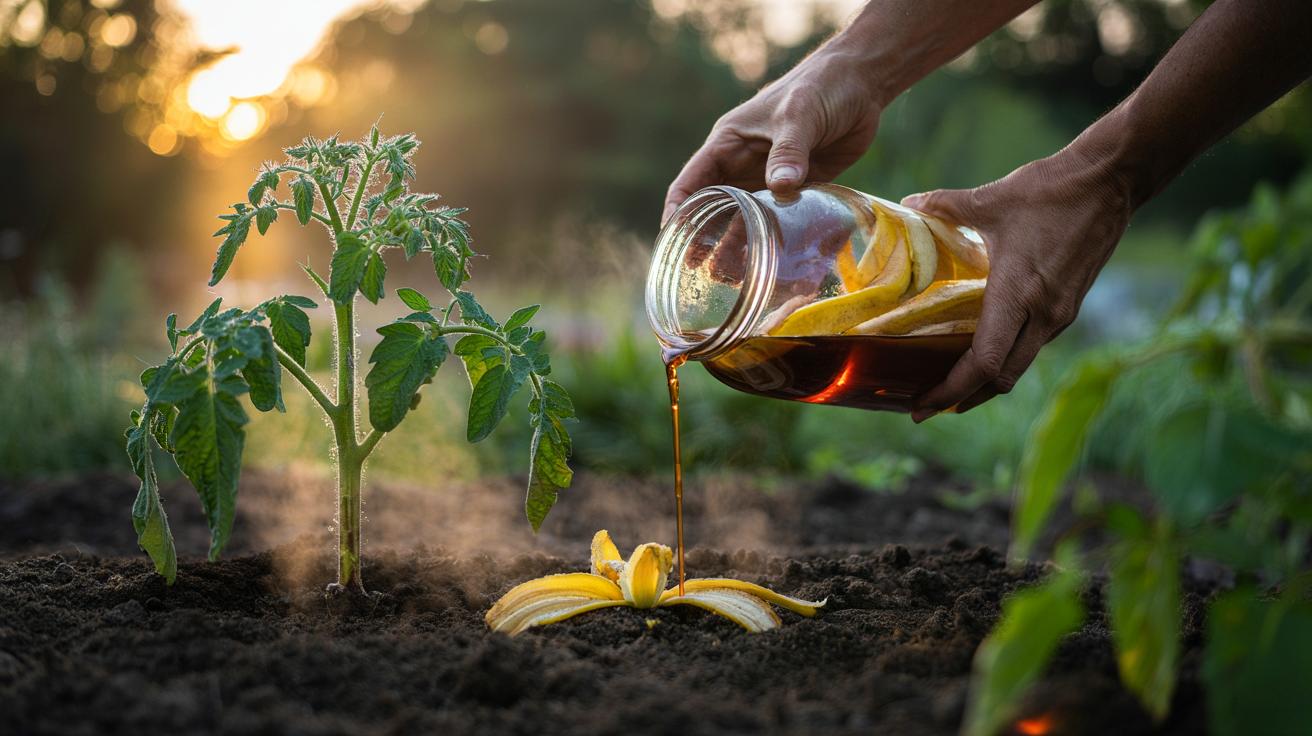
For a simple, fast infusion, rinse one or two peels to remove handling residues. Chop them into tiny squares or snip thin strips with scissors—surface area is everything. Place in a clean jar, cover with just-boiled but not boiling water (about 500 ml), and cap loosely. Steep 8–12 hours, then strain. Dilute 1:4 with cool water. Use as a soil drench around the root zone, not on leaves. This “banana peel tea” delivers gentle, immediately available potassium without overwhelming salts. For hungrier crops, blend peels with water into a light slurry, strain well to avoid clogging watering cans, and still dilute before use. Avoid adding salt, dairy, or oily residues. A teaspoon of unsulphured molasses can feed microbes, but it’s optional.
Apply in the evening or early morning when stomata and roots are most receptive and evaporation is low. Containers may show perkier leaves by the next day, especially in warm weather. For a steadier release, dry peels at low heat (60–70°C), grind, and sprinkle a teaspoon into potting mixes. That’s slower, less “overnight,” yet helpful. Do not rely on peels alone; pair with balanced compost or an all-purpose feed. Small, frequent applications beat one heavy-handed dose.
Safety, Pests, and Common Myths
Banana peels are safe, but sloppy use causes grief. Whole peels tossed on beds can attract fruit flies, rats, and slugs. Bury chopped peels at least 10 cm deep, or better, use an infusion to keep surfaces clean. Avoid peels contaminated with oils, salt, or cleaning agents. If your tap water is heavily chlorinated, let it stand for a few hours before soaking, supporting beneficial microbes. A tidy process keeps your boost from becoming a pest magnet. In small patios or balconies, always strain, dilute, and water in; wipe spills to deter insects. Houseplants need even gentler doses.
Myths abound. Peels are not a miracle cure and they are not high in nitrogen, so don’t expect lush leaf growth from peels alone. Overdoing potassium can antagonise magnesium uptake; watch for interveinal chlorosis in sensitive plants. Claims that peels instantly eliminate aphids are exaggerated; the real benefit is improved plant vigour over time. Another myth: burying peels under tomatoes prevents blossom-end rot. Calcium helps, yes, but consistent watering and overall calcium availability matter more. Think of peels as part of a balanced soil diet, never the entire menu.
Which Plants Benefit Most and How to Time Applications
Plants that crave potassium respond best. Tomatoes, chillies, peppers, cucumbers, courgettes, pumpkins, roses, and flowering annuals appreciate a light, fast K nudge as buds form and fruit swell. In pots, where nutrients leach quickly, a diluted peel infusion can revive lagging growth within a day or two. Herbs like basil may enjoy the lift, but go light to preserve essential oil concentration. Houseplants such as peace lilies or pothos tolerate small doses; succulents and cacti prefer minimal moisture and very sparing feeds. For acid lovers like blueberries, infusions are generally fine, though keep applications modest.
Timing matters. Use the overnight soak so you can water at dawn, repeating every 2–3 weeks in the growing season. During heatwaves, smaller weekly doses can help replace leached K in containers. In the ground, pair banana boosts with compost and a mulch to moderate release and moisture. Seedlings and ferns prefer weaker solutions. Pause or halve doses in winter when metabolism slows. If foliage greens up but edges crisp or curl, back off; that signals imbalance or salt stress. Let plant response, not habit, set your schedule.
Banana peels won’t replace a well-made compost or a balanced fertiliser, but they’re an elegant, low-cost way to add quick-access potassium and support microbial life between regular feeds. Prepared right, they can pep up containers, encourage better flowering, and reduce waste from your fruit bowl. The trick is precision: small amounts, clean methods, consistent observation. Use peels as a nimble supplement, not a silver bullet. Ready to experiment in your beds, borders, or balcony boxes—and which plants will you treat first to test the overnight boost?
Did you like it?4.4/5 (30)