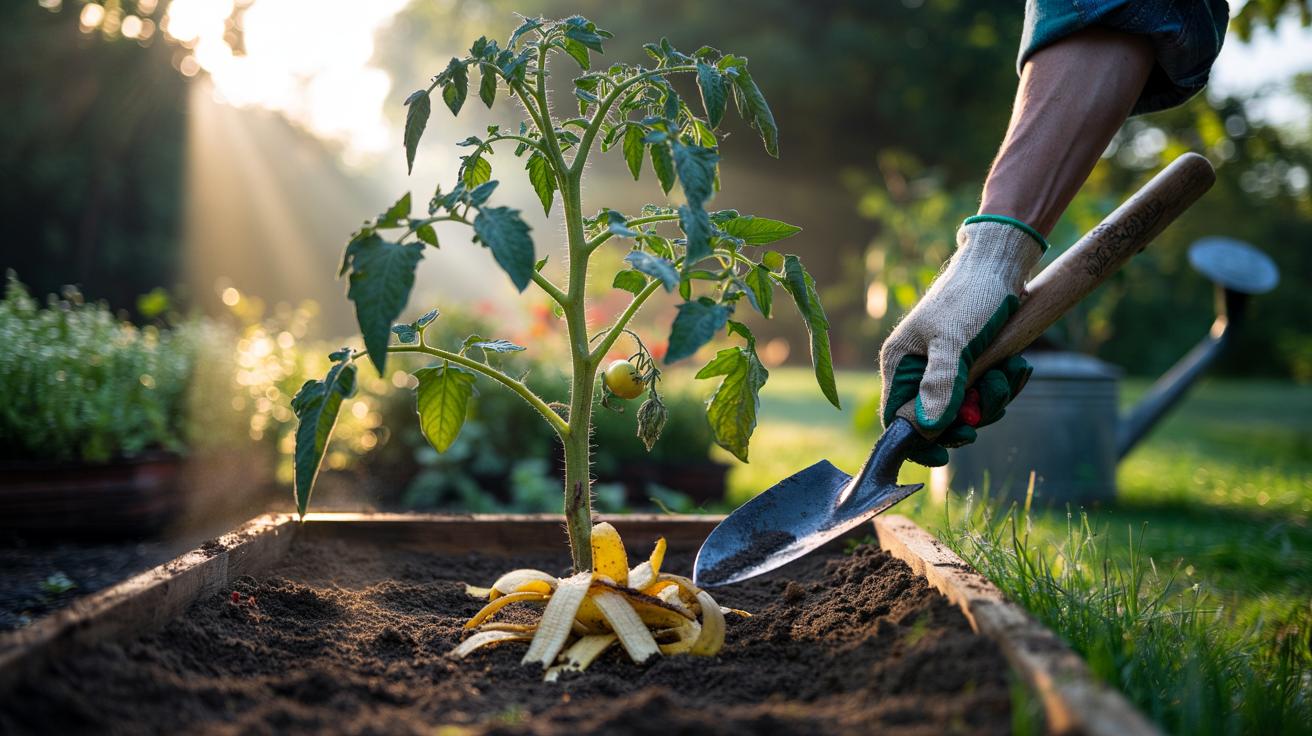
In a nutshell
- 🌿 Banana peels deliver potassium, phosphorus, and calcium, feeding plants and soil microbes for a quick perk now and a steady release later.
- ⚡ For fast results, use chopped/buried peels, a diluted banana tea, or fermented slurry placed in the root zone—never leave whole peels on the surface.
- 🧬 The “overnight” revival stems from K-driven stomatal function, P-powered ATP production, and microbe-released acids that unlock bound nutrients.
- 🍅 Best for high-K lovers—roses, tomatoes, peppers, dahlias—apply in a shallow ring, water well, and pair with quality compost for balanced growth.
- 🚫 Limits and cautions: peels are low in nitrogen, can attract pests if exposed, and may slow in cool/dry media—use modest amounts, especially with houseplants, as a targeted boost.
In allotments and back gardens across Britain, a quiet revolution is brewing in the compost caddy. The humble banana peel—once tossed without a thought—is being pressed into service as a powerful soil booster. Gardeners swear they see leaves perk up by morning, blooms deepen in colour, and wilted stems recover their poise. Some of that is careful observation. Some is chemistry at work. The peel’s cache of potassium, phosphorus, and calcium feeds both plants and microbes, which in turn enliven tired soil. Results can be startling. Handled correctly, peels deliver a rapid nudge and a longer, steady feed, turning kitchen waste into a fast-acting tonic for beds, borders, and pots.
What Makes Banana Peels Soil Superchargers
Peel a banana, and you’re holding a natural slow-release fertiliser in thin yellow wrapping. The skin is unusually rich in potassium, the nutrient that governs water balance and leaf turgor, which is why plants sometimes look revived within hours of a feed. There’s also meaningful phosphorus to support root energy and flower set, plus calcium for firm cell walls and disease resilience. Trace elements—magnesium, silica, and small amounts of nitrogen—arrive as extras, rounding out a gentle but useful profile.
Under the soil surface, the magic accelerates. As peels break down, they feed beneficial microbes, which release enzymes and organic acids that unlock tied-up nutrients. This microbial pulse can be rapid, particularly in warm, moist beds or a well-watered pot. The immediate perk many gardeners notice is often the plant restoring its osmotic balance due to fresh potassium availability. Over days and weeks, the peel continues to mineralise, offering a second wave of nourishment that supports sustained growth rather than a sharp spike and crash.
Texture matters too. Chopped or blitzed peels decompose quickly, avoiding the leathery, pest-attracting lag of whole skins. Their modest carbon-to-nitrogen ratio helps them blend into existing compost streams without locking up nitrogen. Think of them as a targeted K-rich top-up that also fuels soil life—small in mass, big in effect.
How to Use Peels for Overnight Results
If fast results are your goal, reduce particle size. Finely chop or blend banana peels with a little water, then trench the slurry 3–5 cm into the potting mix or bed, a few centimetres from the stem. Water well. This puts nutrients in the root zone and speeds microbial access. For container plants, a tablespoon or two per 20 cm pot is ample. Do not leave whole peels on the surface; they invite gnats, slugs, and rodents. In warm conditions, you’ll often see improved leaf posture by morning, with stronger colour after several days.
“Banana tea” is a useful quick feed. Soak chopped peels in a jar of rainwater for 24–48 hours, shake, strain, and dilute 1:4. The liquid provides a gentle potash boost, while the solids can be buried or added to the compost heap. Fermented peel mixes (with a spoon of sugar and an airtight jar) reduce odour and hasten breakdown, a good option for urban balconies. Always bury residues lightly to avoid mould and fruit fly issues.
| Method | Key Nutrients | Best Use | Release Speed |
|---|---|---|---|
| Chopped/Buried | Potassium, phosphorus, calcium | Flowering beds, veg pots | Fast–medium |
| Banana “Tea” | Potassium in solution | Quick foliage perk | Fast |
| Fermented Slurry | Broad spectrum, microbe-rich | Poor soils, containers | Fast–steady |
| Compost Blend | Balanced via mixed inputs | General soil improvement | Slow–steady |
For roses, tomatoes, peppers and container dahlias—hungry, high-K lovers—a little goes a long way. Combine peel feeds with regular watering and mulch. Never crowd woody stems; bury amendments in a ring, not a clump. That keeps roots aerated and reduces rot risk.
Science Behind the Sudden Revival
Why do plants sometimes rebound overnight? The short answer: potassium drives stomatal function. When roots can access more K, guard cells open and close efficiently, regulating transpiration and photosynthesis. Leaves rehydrate, regain rigidity, and show that “just-watered” look. Meanwhile, phosphorus fuels ATP production, powering root activity that scavenges more nutrients. On the structural side, calcium strengthens cell walls, limiting tip burn and helping tissues resist opportunistic pathogens.
The biological cast matters as much as the chemistry. As peels decompose, a bloom of beneficial microbes—bacteria and fungi—releases organic acids that solubilise bound minerals in your soil. Some rhizobacteria exude hormone-like compounds that subtly stimulate root branching. This micro-driven unlock, plus the peel’s own minerals, creates a double benefit. In healthy, warm soils, that process can begin within hours. The visible “overnight” effect is often a combination of restored water balance, improved nutrient uptake, and a brief microbial growth spurt.
There are limits. Peels are low in nitrogen, so relying on them alone can starve lush, leafy crops. In cool or very dry media, decomposition slows and the response lags. Houseplants are especially sensitive to anaerobic pockets, so only use tiny, well-chopped amounts, or stick to strained liquid feeds. Pair peels with balanced compost, seaweed extract, or a complete organic fertiliser to keep growth even and avoid deficiencies.
Banana peels won’t replace a well-made compost heap or a soil test, yet they’re a nimble tool for gardeners who want quick, visible lift and deeper, living soils. Used thoughtfully—chopped, lightly buried, or brewed—they rescue drooping plants, energise sluggish containers, and put kitchen scraps to work. The trick is placement, moderation, and timing. Treat peels as a targeted boost, not a cure-all. As spring growth surges and borders wake, how will you fold this small, potent resource into your feeding routine to get the strongest bloom and the healthiest soil life?
Did you like it?4.5/5 (24)