In a nutshell
- 🫖 Tea bags quickly sanitise cutting boards via polyphenols (catechins, theaflavins) that disrupt bacterial membranes; warmth and mild acidity amplify the antimicrobial hit against common pathogens.
- 🔧 Simple method: scrub with hot soapy water, then wipe with a warm tea bag, ensuring contact time of 60–120 seconds (up to 3–5 minutes for odours), and dry upright to leave a subtle tannin film.
- ⚠️ Works best for produce, bread, and cheese boards; not enough after raw meat or shellfish—use a food‑safe disinfectant meeting BS EN 1276 and keep separate boards for high‑risk foods.
- 🪵 Material matters: wood benefits from tannins and odour control, while plastics and bamboo also improve—though strong black tea may stain light plastics; maintain boards by drying thoroughly and re‑oiling.
- ⚖️ Compared with alternatives: hot soapy water is essential for soil removal, tea offers gentle, fast refresh, bleach delivers highest kill for high risk, while vinegar and hydrogen peroxide sit in the middle.
Here’s a kitchen trick that sounds folksy yet stands up to scrutiny: a used tea bag can help sanitise cutting boards with surprising speed. The secret isn’t magic; it’s chemistry. Tea leaves bristle with polyphenols that batter bacterial membranes, neutralise odours, and leave a faint protective film on wood. It’s thrifty. It’s low‑waste. And it’s safe for surfaces that don’t like harsh chemicals. For day‑to‑day fresh‑produce prep, tea can slash microbial load quickly and deodorise in one pass. Still, context matters. For boards that have touched raw meat or shellfish, you’ll want a heavier‑duty disinfectant and good habits around segregation.
The Science Behind Tea’s Fast Kill
Tea is a compact arsenal of bioactive polyphenols, notably catechins in green tea and theaflavins in black tea. These compounds disrupt bacterial cell walls, chelate metals microbes need to function, and interfere with enzymes. The upshot is a rapid reduction in common kitchen culprits such as E. coli, Staphylococcus aureus, and odour‑forming bacteria that linger after chopping onions or garlic. Heat accelerates the effect: a warm, freshly steeped bag delivers actives faster, while moisture helps lift debris and loosen early biofilms.
There’s a second act. Tea’s tannins bind proteins, including surface grime, making it easier to wipe away. On wooden boards, they also interact with lignin, forming a subtle, almost invisible film that can inhibit some bacterial attachment. That doesn’t replace washing, but it can buy time and freshness between full clean‑downs. The combination of warmth, acidity, and polyphenols explains why tea works quickly compared with plain water alone.
pH plays a role too. Tea is mildly acidic, which nudges the environment away from what many microbes prefer. While it’s not as potent as bleach, the overall cocktail—heat, acidity, polyphenols—adds up. Results vary by tea type and strength. Strong black tea tends to deodorise best; green tea often shows a sharper antimicrobial punch. Decaf still works, though generally with slightly lower potency.
Step-by-Step: Sanitizing a Cutting Board with Tea Bags
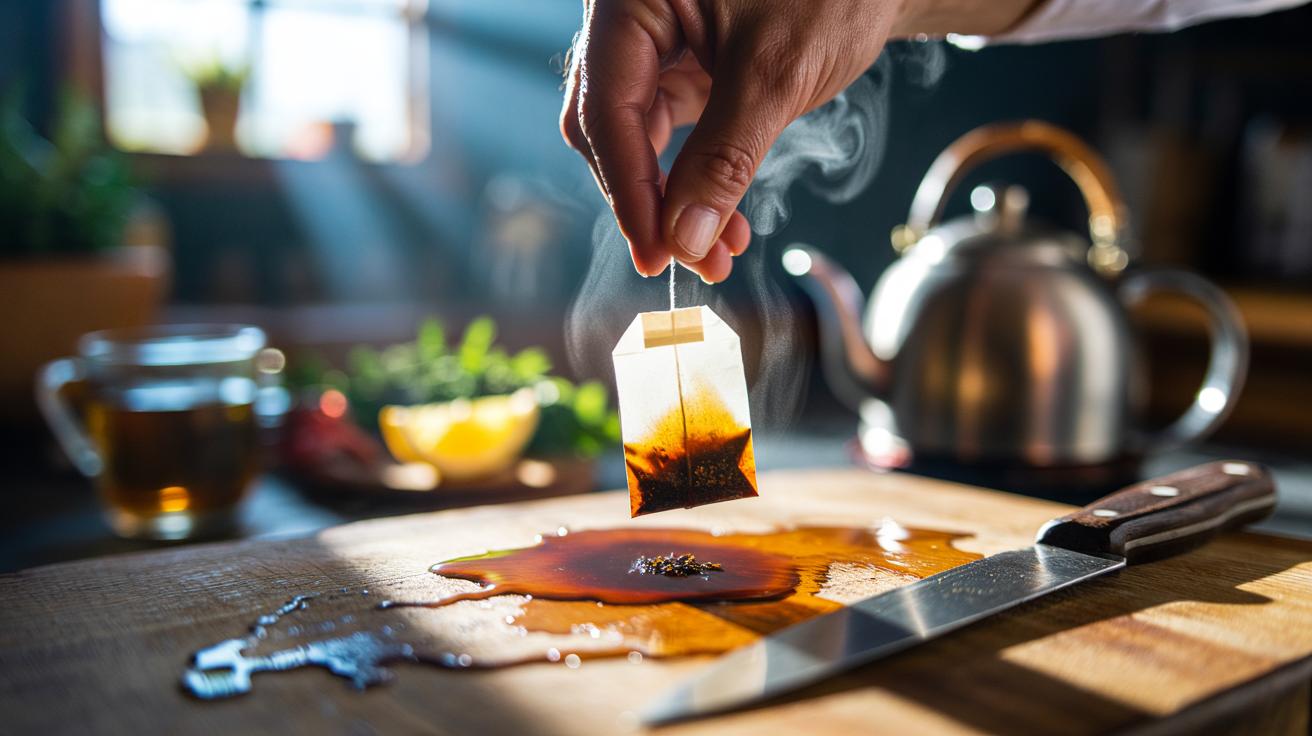
Start with a clean slate. Scrub the board using hot water and washing‑up liquid to remove fats and particles; rinse well. Boil a kettle and brew one or two black or green tea bags in a mug for 2–3 minutes. Let the bags cool just enough to handle safely—warm, not scalding. Warmth speeds the release of active compounds and improves contact with the surface.
Squeeze the bag lightly to avoid dripping, then wipe the board in overlapping strokes, paying attention to knife grooves and the board’s edges. For a larger board, use two bags or re‑dip to keep the pad damp and warm. Aim for a contact time of 60–120 seconds for routine refreshes; go to 3–5 minutes for smellier jobs. You can lay the bag flat on stubborn spots and press gently to keep the area saturated.
Finish by air‑drying upright or patting dry with a clean tea towel. On wooden boards, a quick follow‑up buff helps spread the tannin film. If you’ve cut raw fish or meat, switch tack: do not rely on tea alone after handling raw poultry or mince—use a food‑safe disinfectant and separate boards. Reserve tea for produce, bread, cheeses, herbs, and day‑to‑day odour control between deeper cleans.
When Tea Works — and When It Doesn’t
Tea bags shine as a rapid, low‑impact refresher for boards that haven’t met high‑risk foods. They reduce microbial counts, knock out smells, and fit neatly into sustainable routines using items you already have. Wood responds especially well because capillaries hold the warm infusion briefly, extending contact. Plastic and bamboo also benefit, though very pale plastics may take on a light stain from strong black tea. Test a discreet corner if you’re fussy about colour.
Limits exist. Deep knife scars and entrenched biofilms demand scrubbing and, at times, a stronger agent. If the board has seen raw chicken, shellfish, or unpasteurised juices, default to a disinfectant compliant with BS EN 1276 or a food‑safe bleach solution, following label contact times. Tea is an adjunct, not a failsafe, in high‑risk scenarios. Also note that herbal infusions lacking true tea leaves (e.g., rooibos, chamomile) usually contain fewer of the relevant polyphenols, so performance is inconsistent.
Good habits multiply the effect. Keep separate boards for raw proteins and ready‑to‑eat foods. Wash promptly so residues don’t harden. Dry thoroughly—moist boards invite microbial persistence. Re‑oil wooden boards periodically to reduce absorption and make wipe‑downs more effective. Add tea as the quick, quiet step that keeps daily prep surfaces fresher between full cleans.
Tea vs. Bleach, Vinegar, and Soap: A Quick Comparison
Consumers often ask how a tea bag stacks up against cupboard titans. The answer is situational. Hot soapy water remains non‑negotiable for physical soil removal. Tea adds rapid antimicrobial action and odour control without harsh fumes. Bleach and certified sanitisers deliver the highest kill in the shortest, predictable time, vital after raw meat. Vinegar is decent for deodorising but slower and less reliable on pathogens. Hydrogen peroxide sits in the middle, effective with correct concentration and contact time.
| Method | Active Agent | Typical Contact Time | Strengths | Cautions |
|---|---|---|---|---|
| Tea bags (black/green) | Polyphenols, mild acidity, warmth | 1–5 minutes | Fast refresh, odour control, gentle on wood | May stain light plastics; adjunct after raw meat |
| Hot soapy water | Surfactants + heat | Scrub 30–60 seconds | Removes grease/soil; essential first step | Not a high‑level sanitiser on its own |
| Dilute bleach (food‑safe) | Sodium hypochlorite | 2–5 minutes | Highest broad‑spectrum kill | Can damage wood; fumes; rinse as directed |
| White vinegar | Acetic acid ~5% | 10+ minutes | Deodorises; eco‑friendly | Variable efficacy; not for high‑risk loads |
| Hydrogen peroxide | H2O2 3% | 5–10 minutes | Good antimicrobial action | Lightens wood; store safely away from light |
Choose the tool that matches the risk. For salads and fruit boards, tea is nimble and kind to materials. After raw protein, step up to certified sanitisers and keep a dedicated board. Used together—scrub, then tea for daily maintenance, disinfectant when risk rises—you achieve cleanliness, safety, and longevity for your kit without needless chemical overkill.
In a kitchen that hums from dawn to dusk, small rituals keep chaos at bay. A humble tea bag, pressed warm across a board, is one of those rituals—quick, quiet, effective. It reduces microbes, tames smells, and respects the character of wood. You’ll still need muscle for grime and a proper disinfectant for risky jobs, but tea shines in the everyday in‑between. Will you add this thrifty swipe to your post‑prep routine, or do you prefer to stick with heavier hitters even for low‑risk chopping?
Did you like it?4.6/5 (25)