In a nutshell
- 🍚 The dry towel under the lid absorbs excess steam and condensation, keeping grains distinct and preventing mushy rice.
- 🧺 Step-by-step method: rinse rice, simmer gently, fit a clean cotton towel beneath a snug lid, rest off heat, and fluff—plus vital safety tip to keep fabric away from flames.
- 🔧 Practical fixes: if too wet, rest longer with the towel; if too dry, add a splash of hot water—includes rice cooker and Instant Pot adaptations.
- 📊 Dial in water ratios by grain—e.g., jasmine/basmati 1:1.25–1.5, short-grain 1:1.1–1.25, brown 1:1.75–2—with the towel stabilising moisture.
- 🛡️ Storage and safety: cool rice quickly, refrigerate within an hour to reduce Bacillus cereus risk, and reheat covered (towel trick helps restore fluffiness).
Ask any home cook in Britain and they’ll whisper the same kitchen fear: rice that turns to paste. Blame busy evenings, fierce hobs, or lids that trap too much moisture, the result is often a claggy, disappointing heap. There is, however, a fix so simple it feels like a magic trick. Drape a dry towel beneath the lid while the rice steams, and watch the texture transform from soggy to feather-light. This humble bit of fabric manages steam, tames condensation, and protects each grain’s integrity. Below, we unpack the science, offer step-by-step guidance, and share troubleshooting tips that’ll make mushy rice a memory rather than a recurring mishap.
Why Rice Goes Mushy and What Steam Does
Rice is mostly starch. When heated in water, its outer layer gelatinises, releasing amylopectin that can make grains gluey. In a lidded pot, aggressive boiling sends vapour up, then back down as droplets. That condensation rains onto the surface, nudging the water-to-rice ratio higher than planned. Result: swollen grains and a sodden top layer that clumps. The dry towel acts as a sponge and buffer. It absorbs excess steam, stops water from dripping back, and evens out heat so the pot simmers rather than sputters. The towel absorbs excess steam, preventing soggy grains. It’s the same principle that gives Persian tahdig and restaurant pilafs their poise—controlled moisture, steady heat, patient resting. The change isn’t subtle. Texture shifts from heavy to buoyant, aromas sharpen, and individual grains stay distinct. In short, you’re managing water already in the system instead of adding more.
| Rice Type | Typical Ratio (cups) | How the Towel Helps |
|---|---|---|
| Jasmine/Basmati | 1 rice : 1.25–1.5 water | Limits perfumed grains from bloating; preserves long-grain separation |
| Short-Grain/Sushi | 1 : 1.1–1.25 | Controls surface stickiness while keeping tender bite |
| Brown Rice | 1 : 1.75–2 | Evens long simmer; prevents top-layer sogginess |
The Dry Towel Method, Step by Step
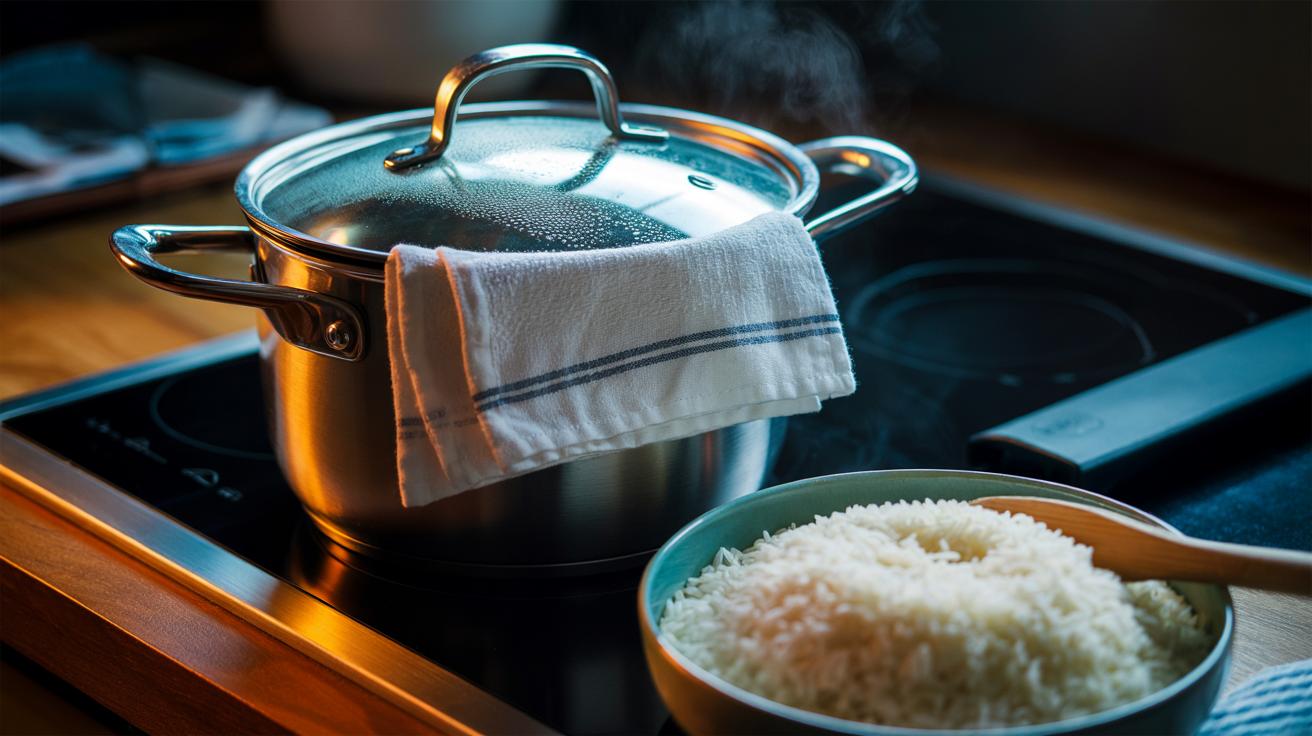
Rinse the rice until the water runs mostly clear; this washes away loose surface starch that would otherwise clump. Measure with intent. For fluffy long-grain, aim for the lower end of ratios; for plumper short-grain, nudge slightly higher. Bring water and rice to a brisk bubble, then immediately dial the heat to low—just enough to maintain a gentle simmer. Now the move that matters: lay a clean, dry cotton tea towel across the pot, then fit the lid over it. The fabric should be taut, not sagging into the rice, creating a soft seal that traps heat but soaks up fugitive steam. Tuck the towel ends up and over the lid, or knot them atop so nothing dangles.
Never let the towel hang near a flame or hot element; keep it well away from ignition sources. Set a timer: 10–12 minutes for jasmine, 12–14 for basmati, 15 for short-grain, 30–40 for brown, depending on your hob and pot mass. When time’s up, switch off the heat but keep the towel-lid in place for 10 minutes. This rest is crucial. Pressure stabilises, remaining moisture redistributes, and grains firm. Lift the lid, remove the towel, and fluff gently with a fork or paddle. Notice the lightness. That’s controlled absorption, not evaporation chaos.
Troubleshooting and Variations for Different Grains
If the rice is slightly wet at the end, return the towel and lid for a further five-minute rest off heat; the fabric will pull in the last of the steam. Truly waterlogged? Drain briefly in a sieve, pop back into the warm pot, reapply the dry towel and lid, and let it sit for 10 minutes. Too dry? Sprinkle a tablespoon or two of hot water over the top, cover with towel and lid, and give it five gentle minutes. For electric hobs that stay hot, slide the pot to a cool ring to avoid overcooking while resting. On gas, keep the flame whisper-low, barely alive.
Rice cooker user? You can mimic the effect. As soon as it clicks to “warm,” place a folded microfibre-free cotton towel under the lid and leave it to rest for 10 minutes. Instant Pot? Use slightly less water than usual, then quick-release and rest with a towel under the lid (on warm) for 5–8 minutes. For basmati destined for pilau, soak for 20 minutes, boil to 70–80% done, drain, then finish with the towel under a tight lid for a fragrant, separate grain. For sushi rice, the towel helps, but don’t overdo it; you still want a cohesive, tender texture ready to take seasoned vinegar.
Beyond the Pot: Batch Cooking, Storage, and Food Safety
Fluffy rice is worth saving well. Spread leftovers on a baking tray to cool fast, then refrigerate in shallow containers. Cool rice quickly and refrigerate within one hour to reduce the risk of Bacillus cereus. Reheat to piping hot throughout; a splash of water and a covered bowl in the microwave works well, or steam gently on the hob with a fresh towel-lid for a minute or two. For weekly prep, freeze flat in bags for quick portions, pressing air out to avoid freezer burn. The towel trick even helps on day two: rewarm in a lidded pan with a dry towel to recapture lightness without adding more water.
Choose the right pot—heavy-bottomed pans disperse heat evenly, reducing hotspots that cause crusty edges and a soggy centre. Pair with a snug lid. Keep a dedicated, lint-free tea towel for rice to avoid stray fibres and flavours. When in doubt, less water plus a towel beats more water and hope. It’s a small adjustment that delivers consistent, restaurant-level results, whether you’re serving dal, stir-fries, or a bright, herby pilaf any night of the week.
In a world of hacks, the dry towel earns its keep by doing one elegant job: managing moisture so your rice stays fluffy, aromatic, and distinct. It respects the grain, the clock, and the cook. With a clean cloth and a calm simmer, you steer the pot instead of reacting to it. Ready to retire mushy rice for good and make this one-minute setup part of your routine—what dish will you try first when every grain lands perfectly?
Did you like it?4.4/5 (28)