In a nutshell
- 🍟 Dry rice acts as a natural desiccant, rapidly absorbing steam around hot chips to protect their crisp crust and prevent sogginess.
- 🧪 The science: rice is hygroscopic, lowering local relative humidity until equilibrium, with grain structure (amylose/amylopectin) boosting fast moisture uptake.
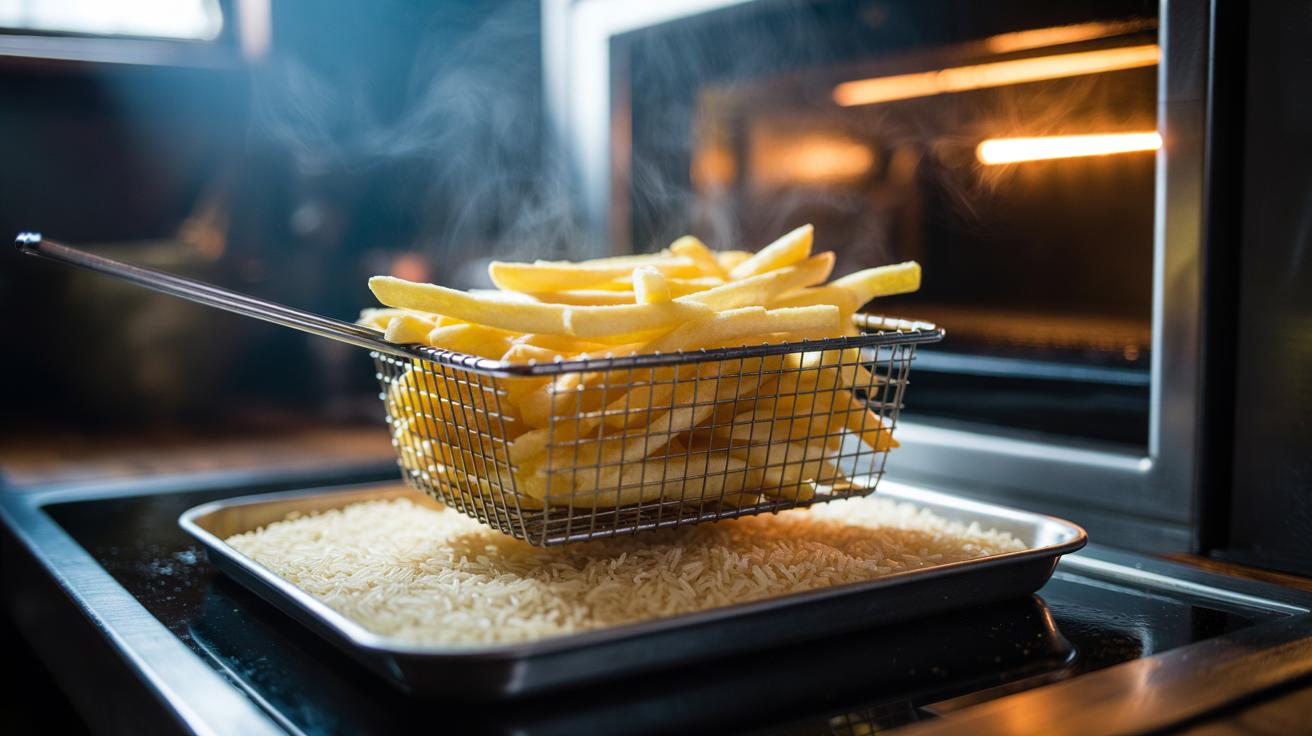
- 🔥 Practical setup: build a warm rice bed in the oven with a rack above; use foil tins of rice in an air fryer and small rice sachets in delivery bags for on-the-go crunch.
- ⚖️ Compare desiccants: rice vs rock salt vs food-grade silica—rice wins for safety, cost, and flexibility near food, especially in warm, humid microclimates.
- 🥔 Technique still rules: use a two-stage fry, avoid crowding, rest on racks (not paper), and re-crisp over preheated rice to keep chips brittle from first bite to last.
Everyone wants perfectly crispy chips that shatter under a fork yet stay fluffy inside. The enemy is moisture. Steam clings to fresh fries, condensation builds in takeaway bags, and reheating can turn last night’s leftovers limp. Here’s the quiet hero: dry rice. Put it near your chips and it draws water away with remarkable speed, acting like a natural dehumidifier. No fancy kit. No chemical sachets. Just grain. This simple, old-fashioned trick strips out the damp that ruins texture. From the hob to the table, or from delivery to desk lunch, rice can be the difference between cardboard and crunch.
The Science Behind Rice as a Natural Desiccant
Dry rice is hygroscopic: it attracts and holds water molecules from the surrounding air. Each grain is a tiny sponge with porous channels around starch granules of amylose and amylopectin. Those channels, plus microscopic surface roughness, increase the grain’s effective surface area, enabling faster sorption when humid air rises off hot food. Think of it as a passive pump. The vapour seeks balance. Rice lowers the local relative humidity (RH) by taking in moisture until it reaches its equilibrium moisture content.
Temperature matters. Warm air from freshly fried chips carries more water and moves faster, so initial absorption can be rapid. Milled white rice, with the bran removed, often absorbs and releases moisture more predictably than brown rice due to its exposed starch and lower lipid content. Grain size also plays a role: basmati’s long, slim profile exposes more surface; short grain is denser but still effective. The punchline is simple: reduce ambient humidity around chips, and their crust stays glassy and crisp. By cutting the vapour gradient at the surface, you slow the sogging that begins the moment chips leave hot oil.
How to Use Rice to Keep Chips Crisp from Hob to Table
Build a rice bed in a low oven. Pour 500 g of dry rice into a shallow tray and slide it onto the lowest shelf at 90–110°C. Set a wire rack over the tray (do not bury chips in rice). Drain chips from the fryer, salt, then hold them on the rack. Rising steam is pulled down and away, into the rice. Heat keeps the rice effective. This setup turns your oven into a moisture sink while avoiding the steamy trap of a closed container.
Batch frying? Park the first batch over the rice bed while you finish the rest. For air fryer cooks, place a foil tin of rice on the floor of the fryer (below the basket) during reheating; it catches moisture without obstructing airflow. Delivering or collecting takeaway? Drop a small envelope of rice (a tablespoon in baking paper or a clean tea-bag filter) at the bottom of the bag, chips above on breathable paper, bag loosely folded. Steam vents, humidity drops. To rescue day-old chips, reheat on a rack placed over the preheated rice tray at 200°C for 5–8 minutes. The combo of heat, air, and absorption restores crunch surprisingly well.
Rice vs Salt vs Silica: Which Works Best for Crunch?
Not all desiccants are equal in the kitchen. Rice is cheap, safe, and reusable. Rock salt grabs moisture quickly but can leach or melt if in direct contact, and it may over-salt if a chip touches it. Food-grade silica gel is extremely efficient yet unsightly at the table and must stay sealed; it’s better in packaging than next to your supper. Use this snapshot to decide what suits the moment. For live service and family dinners, rice balances safety, speed, and practicality.
| Desiccant | Speed | Food Contact Safety | Best Use | Reusability | Cost |
|---|---|---|---|---|---|
| Dry Rice | Fast near heat | Safe nearby; avoid direct mixing | Oven rice bed, delivery bag | Yes (dry at 100°C) | Very low |
| Rock Salt | Fast | Keep separate; can over-salt | Tray under rack in low oven | Yes (bake to dry) | Low |
| Silica Gel (Food-Grade) | Very fast | Only in sealed sachet | Packaging, storage | Sometimes (oven reactivation) | Moderate |
In practice, rice wins for flexibility. It thrives in warm, humid microclimates—exactly what a fresh batch of chips creates. Keep it close, keep it dry, and keep it hot.
Technique Matters: Frying, Resting, and Recrisping Fundamentals
Rice helps, but method rules. Start with a classic two-stage fry: blanch at 150–160°C until tender, rest to steam off excess moisture, then finish at 185–195°C for colour and crunch. Don’t crowd the oil; temperature dips create greasy, soggy crusts. After the final fry, drain for 20–30 seconds, then move chips to a rack over that warm rice bed. Airflow above. Absorption below. Paper towels trap steam; racks and rice disperse it.
Parboiling and chilling? Dry thoroughly before the final fry. A short freeze (20–30 minutes) after the first cook encourages a drier surface, setting you up for a glassy crust. Reheating leftovers? Use high heat, a rack, and preheated rice. Avoid sealed containers until serving; they build a mini-sauna. Season while hot so salt sticks, but keep the environment vented. Little details stack up: oil at the right temp, vented holding, and smart humidity control. Together they defend that brittle crust from the first crunch to the last.
Rice won’t season your chips or fry them for you, yet it quietly solves the biggest texture killer: ambient moisture. Harness it in the oven, tuck it into a delivery bag, or pair it with an air fryer for a quick save on day-old leftovers. It’s thrifty, invisible, and effective. Think of rice as the dehumidifier your chips deserve. Ready to set up a tray of grains alongside your next fry and taste the difference, or do you have another crisp-keeping trick worth putting to the test?
Did you like it?4.4/5 (30)