In a nutshell
- 🍋 Lemon juice acid reacts with bicarbonate of soda to release CO₂, lowers pH to tenderise gluten, and can affect the Maillard reaction—manage heat and sugar for colour.
- ⚖️ Practical method: 150 g flour, 240 ml milk + 1 tbsp lemon, 1 tsp baking powder + 1/4 tsp bicarb; keep batter lumpy, rest 5–10 minutes, cook on medium heat, flip once.
- 🥛 Smart swaps: use plain flour (or adjust with self-raising), choose buttermilk or lemoned milk, tweak plant milks with extra acid/soda, and pick butter for flavour or oil for extra lift.
- 🔧 Troubleshooting: flat stacks mean stale bicarb; soapy notes signal too much soda or too little acid; pale pancakes need more heat/sugar; overmixing toughens; thin batter needs a touch more flour.
- 🥞 Outcome: controlled acid–base balance yields fluffy pancakes with clean, bright flavour; make a test pancake, then batch; cool on a rack, freeze with paper, and reheat for weekday ease.
Fluffy pancakes are never an accident. They are chemistry served hot on a plate. Lemon juice is the quiet catalyst, nudging a simple batter into something cloud-soft and irresistible. A few drops alter pH, trigger carbon dioxide release, and tenderise gluten, transforming the texture from flat to floaty. The technique is forgiving, yet precise. Stir gently, time it right, heat the pan correctly. Small tweaks deliver big lift. If you’ve ever wondered why your pancakes slump instead of soar, the answer often hides in the balance between acid and alkaline. Here’s how to make that balance work for you, every time.
The Science Behind Lemon Juice and Batter
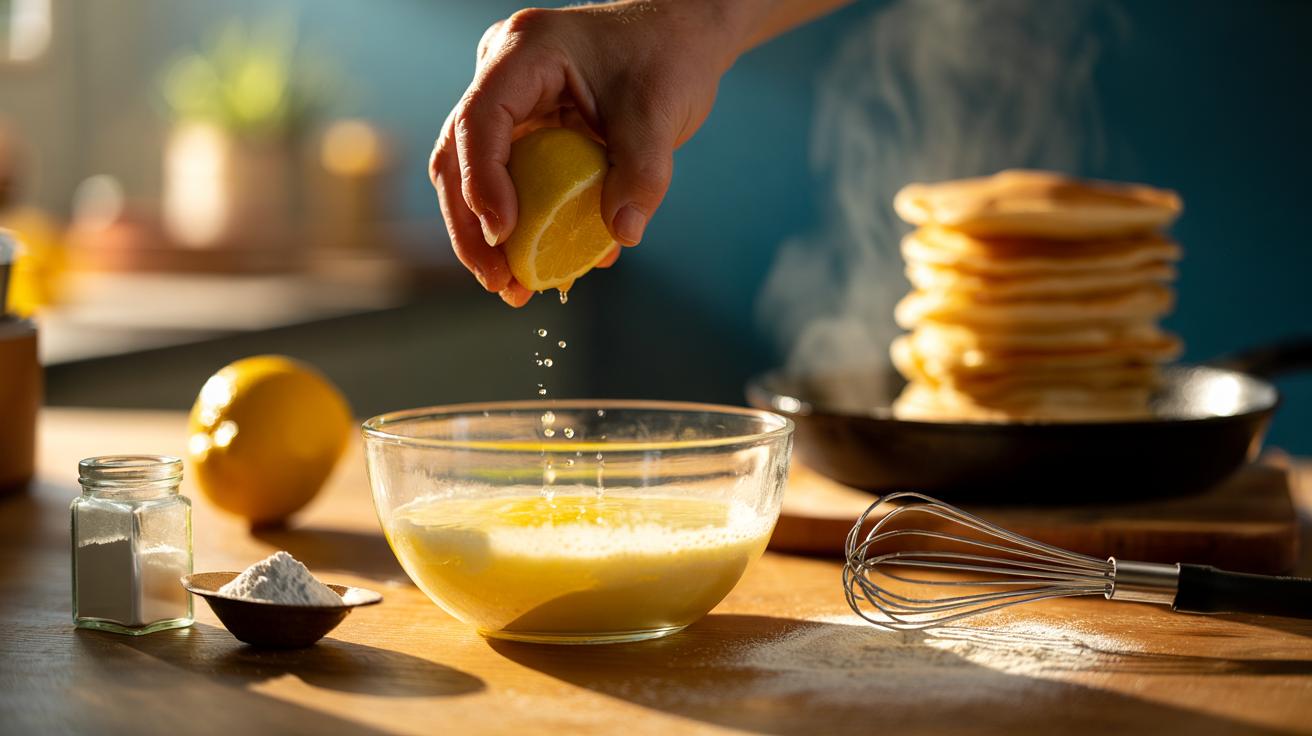
At its heart, a fluffy pancake is a managed reaction between an acid and a base. Add lemon juice, a mild acid, to bicarbonate of soda and you instantly release carbon dioxide. Those bubbles expand in the heat, making the batter rise. Add acid to alkaline leavening to generate bubbles on contact. If you rely on baking powder alone, you still benefit; most powders are double-acting, but a touch of lemon can accelerate the first lift while softening the crumb. That change in pH matters. Lower pH gently weakens gluten bonds, creating tenderness without turning the batter slack.
Lemon juice also interacts with dairy proteins. Stirred into milk, it makes quick “buttermilk,” thickening the liquid so it clings to bubbles and suspends them. Result: a stable foam, not fleeting fizz. There’s a trade-off with browning. Acidic batters can slightly delay the Maillard reaction, so you may need a fraction more heat or a pinch more sugar for good colour. Balance lift with colour by adjusting flame and sweetness, not by overcooking. Used judiciously, lemon brings lift, lightness, and a fragrant brightness that never veers sour.
The caution is simple: too much acid demands too much soda, and excess soda tastes soapy. Keep the reaction in range. That’s the secret to those café-level stacks you dream about.
Ratios, Timing, and Technique for Fluffiness
For two generous servings, start with 150 g plain flour, 1 tbsp sugar, 1 tsp baking powder, and 1/4 tsp bicarbonate of soda. Whisk separately 240 ml milk, 1 tbsp fresh lemon juice, 1 large egg, and 30 g melted butter or 2 tbsp neutral oil. Combine wet into dry with a few gentle folds. Leave streaks of flour. Lumpy batter equals tender pancakes. Rest 5–10 minutes to let the acid-base system build microbubbles while flour hydrates. Do not rest for ages; the first reaction is quick, and you want it in the pan, not the bowl.
Heat a non-stick pan on medium. A light sheen of oil, then wipe. Scoop 60–80 ml batter per pancake. When edges dull and the surface shows bursting bubbles, flip once. Cook the second side briefly. If colour lags, nudge the heat up; if the centre sets before you get lift, reduce. Control temperature, not the spoon. Overmixing knocks out gas and overdevelops gluten. Keep stirring to a minimum, then trust the reaction. For extra loft, separate the egg, whisk the white to soft peaks, and fold it through. It’s optional, not essential, when your acid-base balance is right.
Need dairy-free? Use 240 ml oat milk plus 1–2 tsp lemon juice and 1/3 tsp soda to compensate for lower acidity and protein. Consistency should drip, not pour.
Choosing Ingredients: Flour, Dairy, and Fat
Flour drives structure. UK plain flour keeps protein moderate, so tenderness remains. Self-raising flour already contains baking powder and salt; if you use it, reduce added leavening and add lemon strictly for tenderness and flavour. Wholemeal lifts less readily, so increase baking powder by 1/4 tsp and add 2–3 tsp extra milk to keep the batter mobile. Dairy decisions matter. Whole milk curdled with lemon approximates buttermilk, but actual buttermilk’s acidity and body deliver even steadier lift. Plant milks vary; choose barista-style oat or soy for protein support.
Fat affects mouthfeel. Butter brings flavour and a delicate crumb; neutral oil makes taller, slightly springier pancakes. Sugar contributes to browning and moisture retention; too much inhibits crisp edges. Cold, thick batters trap gas better. Keep ingredients at room temperature for even mixing, but don’t warm the batter excessively. For salt, a modest pinch sharpens flavour without toughening the crumb. If using self-raising flour, taste before salting; it may already be seasoned. Aim for a batter that ribbons slowly off a spoon, leaving faint mounds that melt back within seconds.
| Component | Guideline |
|---|---|
| Flour | 150 g plain; or self-raising with reduced leavening |
| Lemon Juice | 1 tbsp per 240 ml milk; 2 tsp with plant milk |
| Leavening | 1 tsp baking powder + 1/4 tsp bicarbonate of soda |
| Rest Time | 5–10 minutes before cooking |
Troubleshooting: Common Pitfalls and Quick Fixes
Flat pancakes? Check your bicarbonate of soda. Old soda loses potency. Use fresh tins and keep them dry. If the batter spread like paint, add 1–2 tsp flour to thicken and trap bubbles. If it sat and deflated, shorten resting time and get the first batch on sooner. Cook the reaction, don’t watch it expire. A soapy aftertaste signals excess soda or insufficient acid; reduce soda to 1/8 tsp or add 1/2 tsp more lemon and a pinch of sugar to rebalance.
Too sour? You’ve tipped the acid scale. Pull back the lemon by 1–2 tsp and rely more on baking powder. Pale tops indicate either low heat or high acidity; increase flame slightly and add 1 tsp extra sugar to encourage Maillard browning. Tough texture screams overmixing. Stir less, fold more. For uneven rise, preheat the pan thoroughly and use consistent scoop sizes. If edges crisp before centres set, lower the heat and cover for 20 seconds after flipping to trap steam and finish the cook. One small test pancake saves a whole batch.
Leftovers? Cool on a rack, not a plate, to avoid sogginess. Freeze between baking paper and reheat in a toaster for weekday fluff without fuss.
Lemon juice isn’t a gimmick; it’s the gentle nudge that makes batter breathe. Strike the right ratio, rest briefly, and handle with restraint. Your reward is lift, tenderness, and a clean, bright flavour that begs for butter and syrup—or berries, yoghurt, and honey. Once you master the acid-base dance, consistency becomes second nature. Ready to test the science on your hob this weekend, and which twist will you try first—zest in the batter, or a squeeze over the stack?
Did you like it?4.5/5 (24)